Welcome to my Album of Photographs and Memories of Travel, practicing Medicine, culinary Experiments, and other Exploits.
Sunday, September 27, 2026
German Studies in Phoenix, AZ
Saturday, May 16, 2026
May Memories, Part I
I have taken so many more pictures than I have shared to Facebook over the last month, so I thought I would put some of them together here in a post written after eating a delicious spring-like lunch (salad and Triskets with brie; the secret is Green Goddess dressing). It feels so good to sit at the dining room table--while Dear Husband eats lunch and watches soccer in the next room--with my wet braid hanging between my shoulder braids, refreshed from a shower after three hours of trimming bushes and pulling weeds and raking up the long grass left by the mower, fueled only by NPR radio on my phone, since I skipped breakfast. That's okay: more room for a piece of the heaping strawberry pie DH baked this morning. It's my turn to have the kitchen for the afternoon: I will watch Persuasion on Netflix Legally Blonde on YouTube while I make banana bread with the over-ripe bunch I brought home from the office.
The first weekend I attended two films at the Jewish Film Festival on the Carnegie Mellon Campus. Validity is a Pittsburgh-produced film starring my colleague's sister as a scientist struggling with whether to use unethically sourced data about hypothermia collected on concentration camp prisoners. It's based on an actual person and controversy, and I don't know why the film's promotional material didn't name Robert Pozos's work at the University of Minnesota (perhaps he asked them not to?).
Meanwhile, Dear Husband was playing and conducting a choral service at church with the Schubert Mass in C (WordSung).
That afternoon I hung out at the main Carnegie Library before watching Disposable Humanity, a documentary about the Aktion T4, when healthcare providers helped the Nazi government sterilize and kill disabled Germans. Theirs are the only Holocaust victim names that by law have to be redacted, as if it is still so shameful to have been diagnosed with a disabling condition that it would be embarrassing for yourself or your family to have it known.
I brought a bunch of "I <3 medical history" ribbons to leave at check in and was gratified to find someone wearing one. (Even though you can't see either of ours in the picture!)
Tuesday, March 24, 2026
What does a physician's signature mean? Celebrating the launch of my book
One of the reasons I have been relatively quiet on the blog front is that much of my free time for the two years--especially on weekends, what used to be prime blogging time--has been devoted to turning my PhD dissertation into book. I finished the last detail in November 2025, and my advanced author copies arrived on February 1. (This is the unboxing video.) It was officially published on 17 March--12 years to the day since I defended the dissertation--and today we celebrated with a book launch. You can watch the video here.
I'm incredibly grateful to my Division for granting me a part-time contract so that I could devote part of my work week to this project and for throwing me this party. My Big Boss, Division Chief Jane Liebschutz, gave an introduction; I spoke for 15 minutes about the project and why this kind of medical history matters to clinicians; there was Q&A; and we ended with food, book signings, and photos.
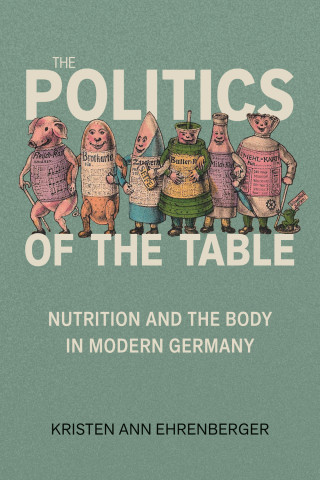
The Politics of the Table: Nutrition and the Body in Modern Germany is a revised version of my PhD dissertation, "The Politics of the Table: nutrition and the telescopic body in Saxon Germany, 1890-1935." It relies on primary and secondary sources in German and English; I did my own translations with the help of online dictionaries and (very rarely, when checking for idioms) Google Translate. I used no AI to compose the text, which consists of 8 chapters, a full introduction and a conclusion, 20 illustrations, and 10 tables. The chapters range from 7,500 to 12,000 words each, for a total of 105,000 words. That is akin to single-authoring ~20 scientific articles (at 5,000 words each)!
Acknowledgments
Introduction: Bodies That Eat and Drink
Part I. “The Kitchen Is the Laboratory of the Housewife”: The Circulation of Nutritional Science, 1890–1930
Chapter 1. From Calories to Vitamins: Nutrition in the Laboratory
Chapter 2. Feeding the Sick: Nutrition and Authority in the Sick Room and the Clinic
Chapter 3. Under the Hygiene Eye: Nutrition at the German Hygiene Museum
Chapter 4. How to Cook Your Vegetables: From the Factory to the Kitchen
Part II. “The Cooking Spoon Is the Scepter of the People’s Health”: Nutrition & and World War I
Chapter 5. “More Than Bitter”: The Blockade and Rationing in Saxony and Bavaria
Chapter 6. “I Am Not a Taste Barbarian”: Food and the Senses During World War I
Chapter 7. Cooking Out but Eating In: The Politics of the Family Table During World War I
Chapter 8. From the Kitchen to the Bedside: Sick Rations in Germany During World War I
Conclusion: Nutritional Knowledge and Ignorance in the Third Reich
Notes
Bibliography
Index
2008-2010 ~ MS1 and MS2 medical student
2010 ~ won the 3 most prestigious dissertation research prizes in my area of interest (chose the DAAD and declined the rest)
2010-2011 ~ research trip to Dresden, Leipzig, Berlin, Munich, and Braunschweig
2011-2014 ~ wrote the dissertation (defense date 17 March 2014)
January-March 2023 ~ sent book proposal and draft manuscript to JHUP
October-December 2023 ~ manuscript accepted and contract signed
December 2024 ~ missed original submission date due to clinical load
March 2025 ~ submitted final manuscript
August 2024 ~ completed proofs
14 November 2026 ~ galleys and index due
17 March 2026 ~ publication date
Chapter 6 on eating and the senses is completely new to the book
I re-researched and completely re-wrote Chapter 9 on wartime sick rations; this is the most original chapter in the book and contributes significant new details on how rations for special populations came about and were managed
All other chapters are shorter and tighter, with some material having been moved between chapters; even with the new chapter, the manuscript is 25,000 words shorter than the dissertation
New ending for the Conclusion
Updated the Bibliography
Changed some of the Illustrations and Tables
Here's the announcement about my first book, written and published in graduate school.
Sunday, October 8, 2023
Montreal, Take 2
The conference hotel was in the more-English-speaking part of downtown Montreal, and it impressed me as an urban space (with a Metro!) unlike Pittsburgh, which seems gritty in some specifically American way, whereas this is clearly a European-inflected place, from the architecture to the buskers.
After checking in, I took myself to lunch at the Jean-Talon Marché, named for the first French administrator, Jean Talon (1726-1694). Marveling at the stalls with their produce, cheese, meats, books, flowers, etc., somehow the cartons of tomatoes, potatoes, lemons and limes, or onions were equally beautiful whether there were arranged with like colors or in alternating bands. I thought of Emile Zola's novel The Belly of Paris (1873) and hoped there was a lot less despair and intrigue. It certainly helped that it was sunny and above 80F/30C.
I had a salmon pie for lunch, picked up apples and clementines for snacks and breakfasts, and selected some baclava for dinner with a friend the next night. With a strategic purchase from Starbucks so I only had to stand in that long, snaking line once, granola bars from home, cookies from the airplane, and free tea from the hotel, I hoped to have to buy myself lunches and the occasional dinner, depending on the robustness of the evening receptions.
Then I made my way to and through the Old Town (Veaux Ville). There was a brass band playing in the middle of Place Jacques-Cartier, at the foot of the monument in the middle of this shot. I stopped by the Chateau Ramezay, the first historical building in Montreal which had served as governor's residence, business headquarters, army billeting, courthouse, normal school, university, and coin museum.I had planned to catch the 2pm tour in English, but a colleague wanted to meet at the Ferris wheel (La Grand Roue de Montreal) in the Old Port at 3pm, so I just buzzed through the gift shop and walked the garden (pictured).
The leaves have started changing colors, but the sky was blue and the temperature warm. We caught each other up on our lives since our joint publication came out in February/March while enjoying great views of the city and port beneath us.
Then we walked to the Notre-Dame Basilica. It was built in the 1820 and the interior redecorated in the 1870s. Inside the brilliant blue ceiling stands out, but all of the walls are painted and gilded, and there are statuary everywhere, even Ezekial and Jeremiah carved into the base of the pulpit, which hasn't been used since Vatican II. Here's also a photo of the 1891 Casavant Freres organ for Dear Husband; has 7,000 pipes from 1/4 inch to 32 feet feet tall. It was quite dark inside, and we wondered how the congregation could have seen or appreciated all these details with sunlight through the few windows and then candle or gaslights. Now the cathedral hosts a music and light show in the evenings for twice what we paid to see the interior during the day.
The alter has Jesus on the cross at the center and is flanked by 4-5 other "altar scenes": Moses prays over the Ark of the Covenant, Aaron immolates a lamb, Abraham sacrifices Isaac, and Melchizedek offers bread and wine, and below all that is The Last Supper.
The stained-glass windows from the 1920s (and some of the statues) feature important citizens in Montreal's past, including a number of women.
Then we joined the rush-hour traffic on the Metro back to the hotel for the opening reception, where I bought a couple of books and chatted up the representative of the junior-year-abroad program through which my parents met and which is still going strong in Munich.
Finally, I joined Arts Night, a very good presentation about a new graphic novel about 4 children's Holocaust stories, illustrated from survivors' stories. I bought myself the book and read it during down times at the conference.
It truly was wonderful to feed the scholarly and friendship parts of my soul. Somebody I had just met asked if I didn't attend very often because this is (no longer) my primary job, but I told her that, on the contrary, it was that much more important for me to do. I attended panels on women in interwar Vienna, diversity in language instruction, domestic design in the early 20th century, Asian-German comics, how to hold an accessible conference, non-White embodiment, ETA Hoffman's fairy tales, medieval illustrations, and 21st-century German streaming "tv."
The one regret I have is that the representative from the University of Toronto Press did not bring hard copies of the journal issue I co-edited that was published early this year. Because my dissertation / book project has been on the back burner for so long that it threatens to evaporate, I wanted to have a photo of proof of my productivity, as a URL just isn't the same. No luck.
I delivered the commentary on one of the last panels of the day and then left before the last question had been answered to make it to the airport for the last flight toward home.
Next year: Atlanta. Maybe I'll have a(nother) book by the time we get back to Washington, DC?