Thursday, July 9, 2020

Quarantine Cooking #1

What have I been up to this summer? It seems like, if I am not studying, I am fixing food, eating food, or cleaning up from one of those two activities. While breakfasts have been a continuous showcase of all the wonderful ways to enjoy fruits and berries--such as the waffles with peanut butter, syrup, and strawberries to the left--and lunches have been a rotation of soups or sandwiches, dinners have included a number of new dishes and/or combinations.


For instance, check out the Treasure Island Chicken above with a creamy cinnamon-pineapple sauce and roasted Brussels Sprouts. I used to bake it with the skin on, but now I buy skinless chicken breasts, and a long time ago I switched from white rice to brown rice for the nutrients. I'm sorry to say I associate this recipe with having a couple over for dinner once who later broke up, as it's a really delightful entree you can make once and eat from for several days.

Speaking of leftovers, I tried a new kind of savory bread pudding, this time with sun-dried tomatoes and corn. Dear Husband usually eats bread pudding reluctantly, but even he agreed this was delicious. From the remains of the French loaf I cut up and froze enough bread cubes for two more casseroles and will probably change up the ingredients to see what else goes together. I have made versions with seafood and with ham and spinach a couple of times, but I notice it has been a while since I made a breakfast bread pudding, and I've only ever made South African Bobotie once before.


Editor's Note: You can find Quarantine Cooking #2 here.

Friday, July 3, 2020

Reflections on Black Poetry

Editor's note: My residency program decided to do the American Bar Association's 21-day Racial Equity Habit-Building Challenge. We've split up the days to read, listen, and write a reflection to share. Here is the second of my two contributions; you can find the first one here.


Today’s readings were a smorgasbord of poetry and songs from some of the most famous Black writers over the last 100 years. Some of them ask us to sit with the discomfort of violence willingly, repeatedly, and sometimes gleefully perpetrated against Black bodies. In “Between the World and Me” (1935), Richard Wright (1908-1960) writes about coming upon the aftermath of a lynching in a forest clearing. He imagines that the dead man becomes him, and that he is tortured and killed all over again.* It is a reading that would have paired well with Billie Holiday’s (1915-1959) “Strange Fruit” (1959, not on the syllabus' that's her above).

In the Year of Our Lord 2020, it is disheartening to listen to Nina Simone’s (1933-2003) “Mississippi Goddamn” (1965)--illustrated below--in which she recounts some of the acts of hate in that state. I know the current state legislature just voted to remove the Confederate battle emblem from the state flag (and replace it with the words “In God we trust”…), but how can we have come so little distance in the intervening 55 years?

More contemporaneously, Claudine Rankine (1963- ) reads the selection from her book Citizen (2014), “You are in the dark, in the car…” that is linked to on the syllabus. She recounts microaggressions, culminating in the time when her new, “trauma-informed” therapist (a white woman), mistook her for not-a-client and tried to drive her away from her home office, although she had arrived on time for her first appointment. The long history of Black witness to white racism makes me think about what I have suffered other people to go through as long as I was comfortable. I can’t say, “I didn’t know. How was I supposed to know?” Black people have been telling us for centuries.


Experiences of repeated racism like these cause festering wounds, as Langston Hughes (1902-1967) wrote in “Harlem” (1951). Do you remember “What happens to a dream deferred? … does it explode?” I saw this famous last line referenced in an article about the riots that happened after George Floyd’s murder. Speaking of famous last lines, the syllabus includes both The Beatles’ “Revolution #1” (1968)—in which John Lennon (1940-1980) mumbles against a static-y background about everybody wanting change, nobody having a plan, and his refusal of violence as a solution—and Nina Simone’s answer, “Revolution (Parts 1 & 2)” (1969), which concludes:

Singin’ about a revolution [lookin’ at you, John]
Because we’re talkin’ about a change [so much talk, so little action]
It’s more than just evolution [i.e. it won’t just happen, you have to make to happen]
Well you know, you got to clean your brain [this is what we’re doing now as budding anti-racists]
The only way that we can stand in fact [Black and proud]
Is when you get your foot off our back […oh]

White people and institutions must lift their feet off Black people’s back (and their knees off their necks). I think this line speaks to the fact that it’s never been that there’s something fundamentally, inherently defective about Black people (or other people of color); it’s that white people are holding them back from achieving their fullest individual and collective selves. Sometimes there’s active racism, other times it’s allowing racist laws and discriminatory actions to continue. In the face of all this sorrow and anger, June Jordan’s (1932-2002) verse, “1977: Poem for Mrs. Fannie Lou Hamer” (2005), celebrates a Southern Black woman who was undaunted by living with racism.

Even when white people think we are helping, sometimes we just aren’t. Black lesbian poet Audre Lorde (1934-1992) meditates on the deficiencies of white feminism in “Who Said It Was Simple” (1973). White women who hire Black women as “the help,” as if being a servant were good-enough employment, made Lorde wonder whether her racial identity could survive a “liberation” based only on her sex and not also on her race. It reminds me of that circle of intersectionality with all the lines representing different facets of identity. By the way, if you are interested in illness narratives, you should read The Cancer Journals (1980), Lorde’s account of her breast cancer treatment.

Pluralsight | Unlimited Online Developer, IT and Creative ...I’ll conclude with Alice Walker’s (1944- ) tough love poem, “The world Rising” (2015). She encourages the reader to wake up and do the hard work already. Good people working together have changed the world for the better (she gives the example of the environmental movement). We must work on ourselves before we can work on the world. But, it’s “A compassionate roll:/ We must be done/ With cruelty/ Especially to ourselves,/ To start again/ Beaming like the sun;/ Fresh.” Be compassionate with yourself as you roll over and get out of bed. Start the new day fresh, with a promise to #BeBetter than you were yesterday.


*While I recognize that the author is not necessarily the first-person protagonist in a piece of writing, it is hard to think that Wright didn’t identify with the “I” in this poem.

Thursday, July 2, 2020

Owning My Whiteness

Editor's note: My residency program decided to do the American Bar Association's 21-day Racial Equity Habit-Building Challenge. We've split up the days to read, listen, and write a reflection to share. This is the first of my two contributions; here is the second.

Cheryl I. Harris is the Rosalinde and Arthur Gilbert Foundation Chair
in Civil Rights and Civil Liberties at UCLA School of Law

The reason I am a historian of the body is because in college I was assigned to read Barbara Duden’s book, The Woman Beneath the Skin. It is an English translation of her exhaustive study of the case records of one early modern German doctor. After sifting through hundreds of patient encounters, Duden realized that these women had a completely different relationship with their bodies than she did with hers. Namely, they saw themselves as deeply embodied, as one with their mortal flesh. It was porous flesh, to be sure, subject to humidity, wind, fright, and the astrological signs. Pre-modern individuals were their bodies. By contrast, Duden described herself as having a modern conception of her body as separate from herself: I exist in my body, but I am not my body (to paraphrase). It was a revelation to her, and to me.

This brings up all sorts of questions about the relationship between an individual patient and her illness. Is cancer “self”? Is depression or anorexia nervosa some true expression of a hidden ego (or, better, id)? Or is it a separate entity that represents a common foe for patient, family, and physician? What about conditions that fall under the broad rubric of “disabilities”? Under the medical model of disability, “a handicapped person” was common parlance. But with the rise of person-first language, we started to say “a person with a disability,” because they were themselves first. A disability was just one of many traits they possessed—or, alternatively—disability was created when society around them did not accommodate their differences (wheelchair users aren’t “disabled” if the built environment is accessible to them, for instance). More recently, some individuals have returned to using phrases such as “an Autistic person,” because their Autism is intrinsic to their sense of self. 

What about race? What about whiteness? Am I a woman who is white? A white woman? A wyt woman? Is my whiteness just one of many traits or a core, inextricable part of my identity? Cheryl I. Harris’s landmark 1993 essay in the Harvard Law Review, “Whiteness as Property,” demonstrates how white Americans have constructed whiteness as a collection of entitlements enshrined into law that they inherit with their light skin and from which they profit. She draws examples from the dispossession of Native Americans and the enslavement of Blacks; interprets numerous legal decisions from the standpoint of whiteness as a property conferring status and material privileges; and concludes by arguing that well-done affirmative action as part of a plan for (re)distributive justice could redress some of generations of inequality engendered by legalized white supremacy. Although lengthy (80 pages), the essay and its voluminous footnotes are eminently quotable. Truly a tour-de-force, I will summarize.


Let me begin by recognizing the fact that I currently occupy land that should belong to the Haudenosaunee or Longhouse Confederacy. You see, a crucial early step in the development of whiteness as property was the argument that only white people could own property. European settlers who wanted Native lands reasoned that although Native Americans were already living on the land, because they held it in common rather than individually, they actually held nothing at all. This argument against the commons originated in 13th-century England, when a few wealthy people started fencing off land for their private use. Enclosure gained steam in the 17th century, when small, scattered tracts were consolidated and divided by hedgerows for greater efficiency. While landowners were thus able to produce more than they needed and sell it for profit, the landless had less, and less fertile, ground to till or to graze. They either scraped by as subsistence farmers or joined the exodus to growing cities as labor for capital to exploit in burgeoning factories. There they owned their wages but not the excess value created by mixing their labor with the employer’s resources. By both common law and book law, could Native Americans “own” land if it wasn’t fenced in? Even if a tribe could hold a deed, could it transfer ownership to individual settlers, or only to whichever government offered to make (and break) treaties with them? And so white people spun the tale of “virgin” land in the New World just waiting for Europeans to possess it “the right way.”

Possession might be 9/10 of the law, but 1 drop of black blood was sufficient to disqualify a person from having personal liberty. This theory is called “hypodescent.” Reason might suggest that majority rules, whether in a democracy or in an individual’s ancestry, but because it was beneficial to white people to pretend that their blood was “pure,” they stood mathematics on its head and decreed that any non-white heritage was sufficient to disbar someone from membership in the white “race.” Similarly, although European societies typically followed patrilineal inheritance, because it was more economical for white slave holders to rape and impregnate female slaves than to purchase black people on the market, they decreed the matrilineal transference of enslavement. Blackness become the marker of the most extreme form of otherness, the potential to be held in bondage. As capitalism and the oppression of the free poor grew over the course of the 19th century, white laborers were able to draw what W.E.B. Du Bois called a “public and psychological wage”: “the wages of whiteness” were the assurance that there would always be someone who was worse off than they were: aka “at least I’m not black.” This divide-and-conquer strategy has hamstrung the labor movement ever since.
William Edward Burghardt Du Bois (1868-1963)
Slavery is in our past, but as William Faulkner famously wrote, “the past is not dead. It not even past.” Harris continues by dissecting two well-known Supreme Court cases that hinged on race. In Plessy v. Ferguson (1896), shoemaker Homer Plessy argued that he should be allowed to ride in the white train car, because he passed as white. Making him ride in the “colored” train car because of his 1/8 black ancestry prohibited him from earning all the (im)material benefits of being assumed to be white in Louisiana, such as the ability to earn a decent living in a “white” job. One of Plessy’s attorneys described whiteness as “the most valuable sort of property, being the master-key that unlocks the golden door of opportunity” (as qted on 1748). The Court disagreed, arguing that if Plessy were white, he could be compensated for the temporary slight to his reputation with a fine from the rail company, and if he were not white, then he was not legally entitled to any of the benefits of whiteness, either riding in train cars or being compensated for slights to his reputation. This ruling allowed individual states to legislate their own racial definitions and upheld discriminatory laws that permitted “separate but equal.”

In Brown v. Board of Education (1954), the Supreme Court finally admitted that “[s]eparate … [is] inherently unequal” BUT allowed states to enact material changes “with all deliberate speed.” You can guess how quickly they moved: like a herd of land tortoises. Unfortunately, Brown was one of those instances when people could argue “there is no more racism,” as if the mere fact of declaring that children should attend integrated schools were sufficient to override generations of lower-quality education, redlining, discriminatory hiring practices, the wholesale destruction of established black neighborhoods (::cough:: Pittsburgh's Hill District), school funding based on property taxes, and—of course—the ensuing white flight out of urban areas funded by federal dollars for highways, federal loans for (white) homeowners, federal subsidies of steel for those ridiculous Cadillacs, etc.

Harris argues that affirmative action policies are a way to break down white expectations that the status quo and all their privileges continue to be protected. Where white support of affirmative action goes awry is when “innocent whites” complain that they should not suffer individually for the sins of their fathers, even though they continue to enjoy the spoils. They seem to be saying, better that black people continue to suffer in a “post-racial” society than that a specific white person loses something. Consider University of California v. Bakke (1978): white applicant Alan Bakke felt that he had a right to attend University of California, Davis School of Medicine, but rather than challenge the 5 seats reserved as favors for well-connected applicants, he went after the 16 seats reserved for students from disadvantaged or minority backgrounds. He won. If we focus on what a few “innocent whites” lose instead of what affirmed black applicants gain, then not only do we miss the opportunity to right past wrongs, but we are centering whiteness. Again.


Thus, Harris defines whiteness as the ability to use trickery and force to own land, people, and the fruits thereof. It was ability to write these inequities into law. It was the privilege to sit on the juries that enforced those laws. And “whiteness became the quintessential property for personhood” (1730). It became the one trait that entitled a person to be their own individual; to possess self-determination, the land of Native Americans, the bodies of Black Americans, and the profits of workers; to appropriate the cultures of others as sports mascots and as Halloween costumes; and the right to bear arms, peaceably assemble, drive, walk, and breathe without molestation from the police. Whiteness is the colorblindness to assume that because I have not enslaved a black person, I am not racist. It is the smug assumption that if Blacks and Whites are not equal it is not my fault, and that I do not and should not have to give anything up to rectify ongoing disparities.

Whiteness is something that I have, whether I want it or not. Unlike my modern sense of self, it is an inalienable part of me, an immutable property. I did not choose to be born into this body, and I do not have to do anything to accrue the benefits of my skin tone. However, I can and must choose to amplify the voices of people of color rather than talking over them; minimize my presence if it will maximize their authority; and take only what I need and redistribute the rest, whether that is recognition, resources, or (meta)physical space. Cheryl I. Harris did us a great service by laying bare the ways in which the United States was built on legalized theft and oppression based on something as ultimately inconsequential as the melanin content of one’s skin. Although Lady Justice claims not to see color, she has never been blind.

Wednesday, July 1, 2020

We Stand With Our Neighbors


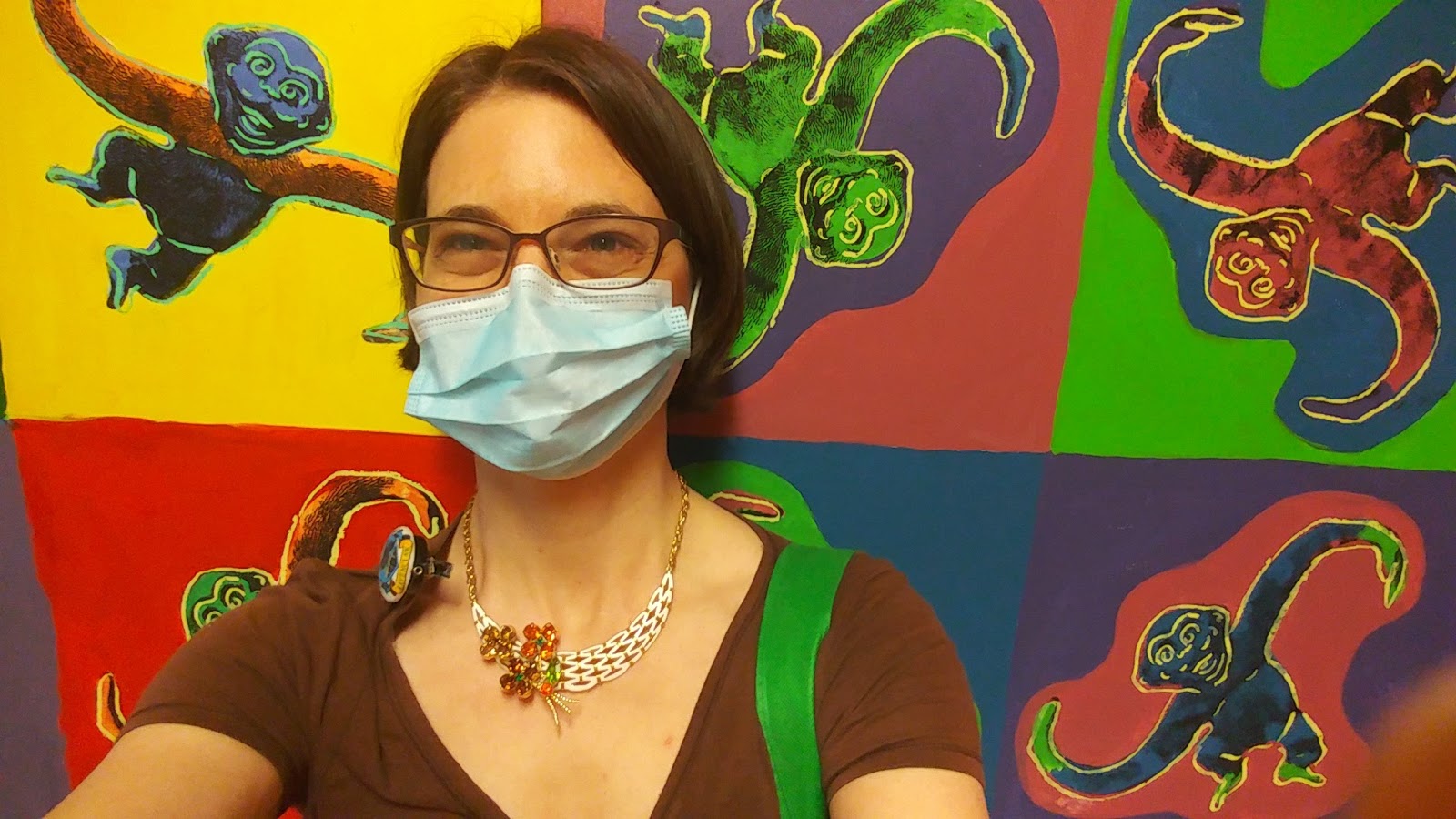
On Wednesday, Dear Husband and I took part in a socially distanced inter-faith prayer vigil in central Oakland. We met a couple friends from church at 11:30am to get "ice cream for lunch" from the famous Dave & Andy's Shop. After all, who wants to rally on an empty stomach? Then we joined several dozen people from different congregations and organizations on the lawn in front of the main hospital. The Presbyterian minister (a man of color) leading the day gave us our marching orders: spread out along the main thoroughfare--every 6 feet a heart had been drawn in chalk on the sidewalk--and turn our signs to face the oncoming traffic. So we stood in the sun--either a half mile or a mile, depending on whom you ask--of encouragement for our neighbors of color in Pittsburgh. Left you can see me being interviewed by the local NPR station; here's the story. We got lots of honks and fist pumps, and one Black lady on her lunch break went down the row, shaking hands and thanking people. (Not the thing to do during a pandemic, but I didn't mind, since I wash my hands as soon as I get home.) I know that showing up like this is almost the least we can do, but I also know that it is so hard to be Black in Pittsburgh. It would be easy to assume that all white people care more about having a fancy arena for their trophy-winning ice hockey team than that Black Pittsburghers have safe neighborhoods, good schools, access to healthcare, and well-paying jobs. We stand with our neighbors to show them that they are not alone. After the hour was up, we returned to the grassy lawn for a brief word of thanks and prayer. Next up: work for lasting structural changes. Amen, and amen.

Tuesday, June 30, 2020

What Residency Looks Like C: Final Bloopers Edition

Now that I have exited the relatively sheltered realm of training and entered The Real World(TM) of practicing medicine as an attending physician, this will likely be my last bloopers post. Far be it from me to maintain that only medical trainees make funny mistakes--I'm sure every nurse and therapist of any kind has at least one tale of a seasoned physician bungling something that would leave you in stitches. But I have decided to relieve myself, at least for now, of the responsibility of enumerating my own faults (there must be 10 per year, no more, no fewer!). Everyone says the steepest learning curve in medical training is the first year as an attending, when you sometimes look around for "the attendier attending." No doubt for the first couple of years I will continue to feel like a "pre-tending," the term we used for ourselves as senior residents when we ran a service with less supervision than usual. Yet I hope to keep my sense of humor about myself, medicine, and the human body, so if I collect (good) enough anecdotes, I will post them here. For now, it seems right to conclude the series with its 100th post.


Top 10 Bloopers of a Fourth-Year Medical Resident

10. There's the time I made Dear Husband carry my pager: I was on call 24/7 but didn't want to be housebound, so I ventured out to the gym...and forgot my pager. He had to take it on his run just in case it went off! (It didn't.)

9. How about after attending the endocrine fellows' morning lecture, I got myself and an intern stuck in an elevator lobby in one of the fancy research buildings that requires a badge to get in, out, and move around it. We had to call the fellow to stop his elevator on our floor so we could get back on and go to the correct floor.

Last day of 32nd grade!
8. Or when I dropped the rest of my donut on the floor of the residency office, picked it up, ... and after thinking about the three long hours of rounding between me and lunch at noon conference, finished it anyway.

7. Repeatedly diagnosing and treating myself for a skin infection around my mouth that I thought I was contracting from my chapstick, only to finally realize that I had developed contact dermatitis (aka an allergic reaction) to my chapstick (that sometimes damaged the skin so badly that it DID get infected).

6. When I held my hands out to a patient in the hospital and asked her to "Give me a big squeeze," intending that she make a fist around my fingers. Instead, she threw her arms around my neck and hugged me.

5. The morning I got on an elevator after an overnight shift in the emergency room and pressed the button for "1." "You're already on the first floor," said the cafeteria worker in the elevator.

4. When I agreed to cover a resident's patients in clinic so she could travel to see her hubby...I didn't put it on my calendar...and she forgot to remind me...so I didn't know why she hadn't shown up and texted around until it suddenly dawned on me that she wasn't even in the state anymore, much less running very late. I very sheepishly saw her patients.

3. The time I logged in to record my last week of duty hours and discovered 44 requests for faculty evaluations. I had worked a single 10-hour shift in the pediatric emergency room, and rather than ask me with whom I had worked, the residency office sent me a request to evaluate every single attending and fellow in the department.

2. Every resident's nightmare finally came true: I didn't read my schedule correctly and slept in on a Saturday when I was supposed to be starting a 24-hour shift. Thankfully I didn't sleep in that much, realized my mistake when the night resident texted the group WhatsApp, and was ultimately less than an hour late. Good thing the she was understanding; a manslaughter charge wouldn't have stood up in court after making her stay an extra hour after a 12-hour overnight shift.

1. When I offered to heat a patient's homemade "hot pack" made of dried rice in a sock and accidentally put it in the microwave on high for too long, which cooked the rice, which expanded and burned through the sock. The microwave, family kitchen, and my scrubs all smelled like burned rice. I hurriedly turned the end of the sock over the rice that was still in the foot, retied it, and hoped the patient didn't notice...

Older

Friday, June 26, 2020

What Residency Looks Like XCIX: All Gone!


At the conclusion of residency, I went to the children's hospital to run some errands:
  • Filled out yet another check-out form (3 programs = 4x the forms!)
  • Dropped off my "pickle phone" and charger for one of the in-coming MedPeds interns (it's the ciiiiircle of technology!); happy to be keeping my pager with its winning number (#5050)
  • Took my final portrait (below)
  • Purchased $42.50-worth of food with the last of my meal tickets: sushi and a boxed salad for lunches, 2 pints of ice cream (chocolate for me, chocolate chip cookie dough for him), 1/2 dozen bagels, and 1 dozen fizzy drinks

Sunday, June 21, 2020

What Residency Looks Like XCVIII: Tea cups


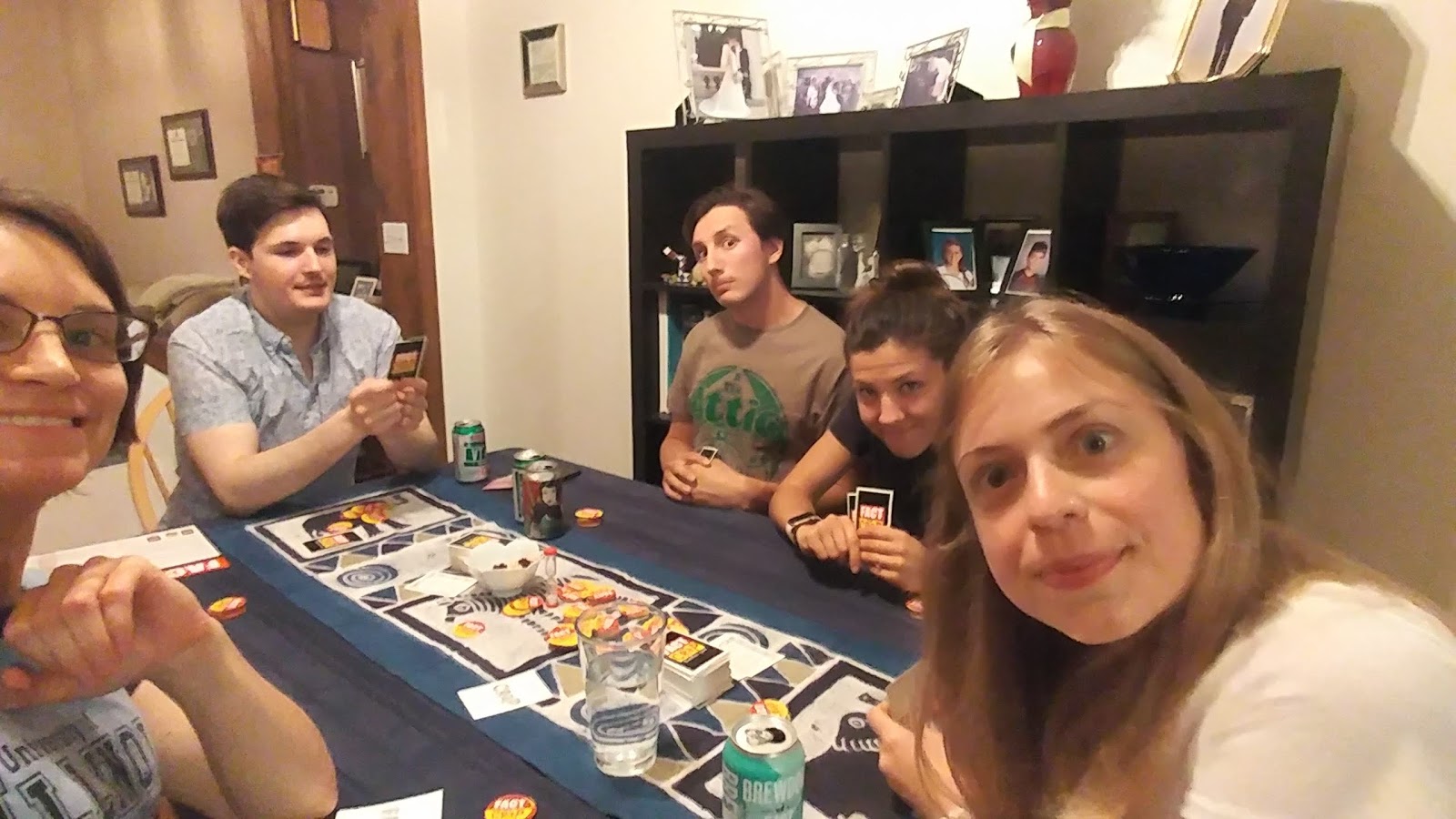
This tea set--a gift from my in-laws--accurately represents my residency class: four different cups and saucers that are equally good for serving hot beverages, and even though they don't match, they still go together. I think I'm the one on the far left. (With two cups in the background for the two significant others.) I will always remember that one time we decided to teach ourselves how to play bridge, and how--briefly--I was Lord of Catan.


Older