Showing posts with label disability. Show all posts

Saturday, July 6, 2019

Devastatingly Beautiful Memoir about Love, Intellect, and Disability

On the left, the cover of the book, A Life Beyond Reason: A Father's Memoir, by Chris Gabbard.
On the right, August smiles at the camera while sitting on his father's lap; his father is smiling at him.
Images from the book's Facebook page.

I have just finished Chris Gabbard's book, A Life Beyond Reason: A Father's Memoir (2019), and I am absolutely devastated. Gabbard describes the birth, life, and death of his son, August, and how August's impairments and disabilities changed Gabbard's outlook on everything from fatherhood to living with a disability to modern medical science to the Enlightenment to his belief in God (or initial lack thereof). While I found the writing somewhat thin at times--perhaps because it is intended for a general audience rather than literature professors such as himself--Gabbard tells August's tale, which begins and ends with medical malpractice, through his perspective as an atheist and an intellectual, with flashbacks to explain how he came to hold various beliefs. A birth injury, for which Chris and Ilene never successfully sued, left August with cerebral palsy and spastic quadriplegia. In his father's eyes this made August "monstrous" in the medieval sense of inspiring awe and (eventually) connection with the divine. In the eyes of many others, unfortunately,  it made him "monstrous" in the Enlightenment sense of defying nature, to the point at which some people could not bear to even look at August.

Perhaps most curious (or frustrating) to me as a medical provider and one who wants to work with the CP population is Gabbard's habit of not naming names--hospitals, doctors, and especially the medical device company that made the intrathecal baclofen pump that was promised to make everything easier but finally broke both August and his father's faith in medicine. I assume this was a legal recommendation. In addition, Gabbard spends a considerable part of this short and effective book rehashing the electronic fetal monitoring (EMF) of August's birth, which indicated fetal distress but was dismissed by overworked and/or overly optimistic birth attendants. But he never comes out and says that retrospective studies have shown that increased fetal monitoring has increased the rate of Cesarean sections to 33% of all births but has not changed rates of cerebral palsy (1:500 live births). Perhaps as much as 70% of CP comes from prenatal causes. Nevertheless, after two nonreassuring fetal stress tests, 39 hours of labor, and 12 days post-dates, maybe a Cesarean section would have prevented (more) damage. We will never know. It was more optimistic doctors (who may have had ulterior, career-minded reasons) who talked Chris and Ilene into implanting an intrathecal baclofen pump, although oral baclofen and Botox injections had not yet failed for August. Thus began his years-long death spiral of complications that ended abruptly with overwhelming pneumonia.

While Gabbard has grieved and will grieve for a lifetime over all this, I am still raw just from reading about it. What Gabbard wants us to know is that he is not sorry to have had the exquisite pleasure and pain of having been August's primary caregiver: waking him in the morning, bathing, changing diapers and clothes, hand-feeding, transferring from bed to floor to wheelchair to stander, and tucking him in at night. The two of them enjoyed each other, and August helped Gabbard realize that the high-intellectual tenets of his youth--namely Socrates' dictum that "an unexamined life is not worth living"--was a farce. Contra John Locke, the fact that August and Chris and Ilene and Clio and all the college students they hired as caregivers lived interdependent lives proved August's humanity. Along the way, Gabbard provides light disability theory and reviews a veritable who's-who of secondary literature on parenting a child with a disability and on modern medical practice.

I can recommend this book to a wide variety of readers, from curious laypersons to self-interested caregivers, and from pre-health-professional college students to practitioners in fields such as pediatrics, rehab medicine, and all the therapies.


Editor's Note: The book author is a colleague of an old friend from graduate school. I don't think this biases my judgment but does make me grateful I found out about the book so soon after publication!

Friday, July 27, 2018

Stars Burning Brightly in the Night


What does it take for you to achieve your maximum potential? The chance to try without repercussions if you fail? Friends who cheer you on? What about a working manual wheelchair and someone to push it? Anti-seizure medications three times a day? A pump to run special formula into your stomach at night? Or a respiratory therapist to clear your lungs of secretions around the clock?

"Heaven's Very Special Child,"
a poem by John & Edna
Massamilla associated with
the special-needs community.
These are all things that happen at Camp CAMP (Children’s Association for Maximum Potential) in Center Point, TX. CAMP offers week-long summer camps for kids and adults with special needs—and their families—during the summer, as well as respite days during the rest of the year. I first volunteered at CAMP as a junior medical student, spending a week as a 1:1 counselor for a teen-aged girl with tuberous sclerosis who loved dress-up and tickling and also needed help dressing and showering. I came back a few years later as a senior medical student to be a healthcare volunteer, administering medications and staffing the infirmary for two weeks. (You can read my blog posts about those adventures here and here.) During the second trip I learned about transitional care, a subspecialty of adolescent medicine that helps young people with special needs transition from pediatric to adult care. (Later I found out about complex care, a related niche of medicine that takes care of such patients across their whole life spans; it’s the reason I chose to train in a combined Internal Medicine-Pediatrics residency program.) The chief residents helped me squeeze a week of vacation between hospital rotations this summer so I could return as a healthcare volunteer for a medically complex week.

My campers this week loved dogs, the color pink, Justin Bieber, Good Night Moon, swimming, and karaoke. They also carried diagnoses like cerebral palsy, spina bifida, holoprosencephaly, and spinocerebellar ataxia. My job was to work with their counselors, lead staff, and other healthcare volunteers to enable them to have a blast by giving their meds (by mouth or G tube), monitoring their hydration status in 100+-degree heat, and assessing their bumps, bruises, vomiting, and seizures. I (re)learned how to catheterize for urine, paddled a canoe, gave a lecture on cerebral palsy, and did a lot of singing, dancing, and laughing. I also did a fair amount of apologizing for getting something wrong, from forgetting supplies, to taking too long to find the right place to put the catheter, to getting the already flexible schedule wrong and showing up early or late, to being perceived as talking down to a camper. “Camp is for the campers.” That’s what/whom we’re here for.

  
Sunday: Hot. A 1-hour drive to the camp was followed by a 3-hour orientation outside, where shade was increasingly insufficient to keep us comfortable. A quick lunch in the AC was followed by 4 hours in a pavilion, checking in campers, learning about them and their medications, and sweating. This was immediately followed by prepping and giving dinner medications, eating dinner, prepping and giving night medications, and (re)cathing one camper. Another of my campers was already sick with a fever. Then there was “grand rounds” in the infirmary. When I got off duty at midnight, I still needed a shower to feel human enough to go to bed. When I told my bunkmates I didn’t mind if they used the toilet while I was in the shower--I believe the actual words that came out of my mouth were "I'm not squeamish"--one promptly came in and threw up (she’s pregnant in her first trimester).

Monday:  Stupid hot. Missed “Tribe Pride Day” because I didn’t pack anything in Cherokee red; wore an old CAMP shirt instead. Had lecture in the morning and staffed the infirmary in the afternoon. That camper with the elevated temperature went home, and another departed to the ED via ambulance after multiple seizures from the heat. Code brown in the pool.

Photo courtesy DG.
Tuesday:  Hotter than stink. Forgot I had to both prep my morning meds and cath a camper in her cabin before breakfast, so I set my phone alarm for 7:15. At 7:13, I woke with the sudden realization that I was already running 15 minutes behind. Good thing the day’s theme was “pajama day”; my unwashed face and uncombed hair were authentic. Successfully cathed the camper with my left hand. Paddled a canoe for 1.5 hours on a shallow part of the Guadalupe River (right). We could see fish in the water and birds flying while the breeze blew through the trees. A dragonfly sat on my finger. This is always one of my favorite parts of CAMP. Code brown in the pool.

Wednesday: Less hot. Wore my CAMP shirt backward for Wacky-Tacky Day. On time or early for all my medications and procedures. Walked alongside and steadied one of my campers as she conquered her fear and rode a horse for the first time. Watched another teenager with balance and coordination problems repeatedly nail her counselors with soaking sponges in “wet dodgeball”; she managed not to trip over the garden hose and sprayed me too, while laughing gleefully. Napped during “toes up time” but still ready for bed at 11pm.

Thursday: Heat almost bearable in the shade. Decorated my Gilligan’s hat with all the pins (“swag”) off my white coat and backpack—except the copper paraguard IUD, which had fallen off who knows where.  Drank my morning tea while swinging in a hammock and waiting for wake-up time at the camper cabin. Gave a 45-minute long lecture on cerebral palsy using the pediatric physiatrist’s slides, whose fonts and punctuation I had standardized. Gave my business card to a medical student who is interested in complex care. Stayed up late for the star ceremony.* Full moon.

Friday: Still hot. Woke up at the usual time, aka an hour before I had set my alarm. Packed and nursed a mug of tea before giving morning meds in my official pink t-shirt. Spent 4 hours sweltering in the arts & crafts pavilion waiting for parents to retrieve their children’s medications. A couple of interns gave me a ride to San Antonio International Airport, where I enjoyed almost two hours of air conditioning and internet before my flight to Chicago. Touched down in Pittsburgh at 2:30am after delays in the Windy City.

Me and the nursing student with whom I worked this week.

*This is the fourth star ceremony I have attended, and it was the first time it really meant anything to me. After the campers have been put to bed, the counselors and staff sway in a circle on a dark hillside watching kerosene on a metal star shape burn out while a couple of star-themed songs play (listen here). The first couple of times it bothered me that I didn’t know the words. This time the ceremony was dedicated to two campers who had passed away: one who had just attended camp the week before, and the other who was supposed to attend this week. I didn’t know either boy, his diagnoses, or when, where, or why he died. But I imagined the one who had just been to Camp CAMP had decompensated, maybe developed a pneumonia, and died in a PICU. I cried. I cried for the resident who declared his death—it could have been a brand-new intern who has only been a physician for a month. The PICU is often a traumatic place, but especially when a child dies. I cried because that resident only knew him as a patient, a couple of lines on a sign-out sheet, and maybe as a source of frustration, the cause of more paperwork. She didn’t get to know him the way his family and his CAMP counselors did, as a boy with a smile that lit up the cabin. That’s what we’re here for.

Sunday, May 1, 2016

Disability Awareness: Accessibility and Inclusion


While I was in Minneapolis for the history of medicine conference, Wesley Church recognized me and four other individuals for their social justice work. I have participated in this annual celebration before (when the theme was Palestine) and was very sorry to miss the worship service, luncheon, and poetry slam. Here are excerpts from the church newsletter.

~ * ~ * ~ * ~

May 1st marked Peace with Justice Sunday at Wesley UMC. United Methodists around the world celebrate this special Sunday, but it holds extra significance for the Wesley community. On this day, we pay special honor to the late Jean Cramer-Heuerman, a senior pastor at Wesley who was known as a passionate advocate for peace and justice. Jean believed social justice is profoundly biblical. She pushed us to challenge unjust systems that harm, exploit, and fail those who are most vulnerable. She reminded us that social justice ministry happens “out there” more than it happens “in here.” She contended that social justice ministry forms disciples who respond with action – disciples who don’t just think theologically but act theologically, following in the footsteps of Christ.

The Jean Cramer-Heuerman Peace with Justice Award was established in 1999 to honor Pastor Jean’s legacy, to recognize those in our Wesley community who incorporate social justice in their practice of faith, and to encourage others to do likewise. The awardees’ names appear on a plaque that hangs in the Watseka Lounge. Roses are given in connection with the award, symbolic of the rose bush planted in Pastor Jean’s honor next to the Peace Pole outside Wesley’s Lamb Courtyard. The variety of rose there is named “Peace.” [See photo above; the message is in eight languages.]

This year’s Peace with Justice theme was “Disability Awareness: Accessibility and Inclusion.”

...

Kristen Ehrenberger has spent the past 12 years at the University of Illinois working towards her MD/PhD. Throughout her time here, she has been an active member in the Wesley Graduate Student book study as well as serving at Faith United Methodist Church in developing their children’s church curriculum.

A constant advocate for racial, gender, and socio-economic justice and equality, Kristen uses social media and participation in community activities to raise awareness of systemic issues of justice that have led to a fragmented community. She has also worked with the graduate student union to ensure graduate student well-being and rights.

Kristen will be leaving this summer to begin her residency at the University of Pittsburgh Medical Center, where she will being doing a four-year combined adult-pediatrics residency program. She intends to enter the “complex care” branch of medicine, in which doctors seek to diagnose and treat patients with multiple life-long healthcare needs. Kristen is a force for social justice not just in her free time, but in her career and vocation.

Friday, March 18, 2016

I Matched!

After months of applications, interviews, and waiting, I am pleased to announce that I have matched in Internal Medicine/Pediatrics at University of Pittsburgh Medical Center (UPMC). This is a combined residency program that smashes six years of training in adult and child medicine into four years. Med/Peds is still the shortest program I could find to let me get out into practice to do what I love after twelve years of graduate and medical school. Doctors who complete this pathway can either become specialists or work in primary care. I intend to do both by entering a niche called "complex care" that includes both diagnosing and treating rare diseases in the hospital and taking care of individuals with multiple life-long health-care needs in the clinic. I imagine my target population as kids with developmental disabilities and related conditions (such as cerebral palsy or Autism Spectrum Disorder)--and their families. Once they age out of their pediatrician, they can still see me, since I will be double boarded in Internal Medicine and Pediatrics.

If you are following along on my Medical Grand Tour, UPMC was one of the last places I interviewed. By January I finally had an idea of what kind of career I want, and what kind of training I need to get there. Med/Peds at UPMC offers all that in an academic medical center--and the #8-ranked children's hospital in the nation--and infrastructure already in place to support the medical humanities--in a mid-sized Midwestern city on the water (three rivers, to be exact). An up-and-coming place, Pittsburgh is five hours from Dear Husband's family and four hours from mine, so the location couldn't be better. Really, it was a no-brainer. So for the last two months, I've been waiting to confirm what I already suspected: that I had found my match, and I didn't even have to kiss a frog. (The mosaic below is from the Pittsburgh Children's Hospital.)


The official photographer didn't get any photos of me making the announcement (how rude!), but you can watch me do so on YouTube by clicking here.

If you're curious how this whole Match thing works, Dear Husband wrote a blog post you can find on the Pianonoise blog.

Click here to see where my classmates matched!

Friday, September 25, 2015

Book review: Dangerous Pregnancies and the Threat of Disability

For the month of September, I was a visiting medical student in Madison, WI, as I tried to figure out what kind of training I should get to prepare me for my goal of working with kids and/or adults with disabilities. So I spent some time in hospitals and clinics; shadowing residents, physicians, and various kinds of therapists; and also some time reading, thinking, and talking about what it means to have a disability and what it means to care for individuals with disabilities and their families.

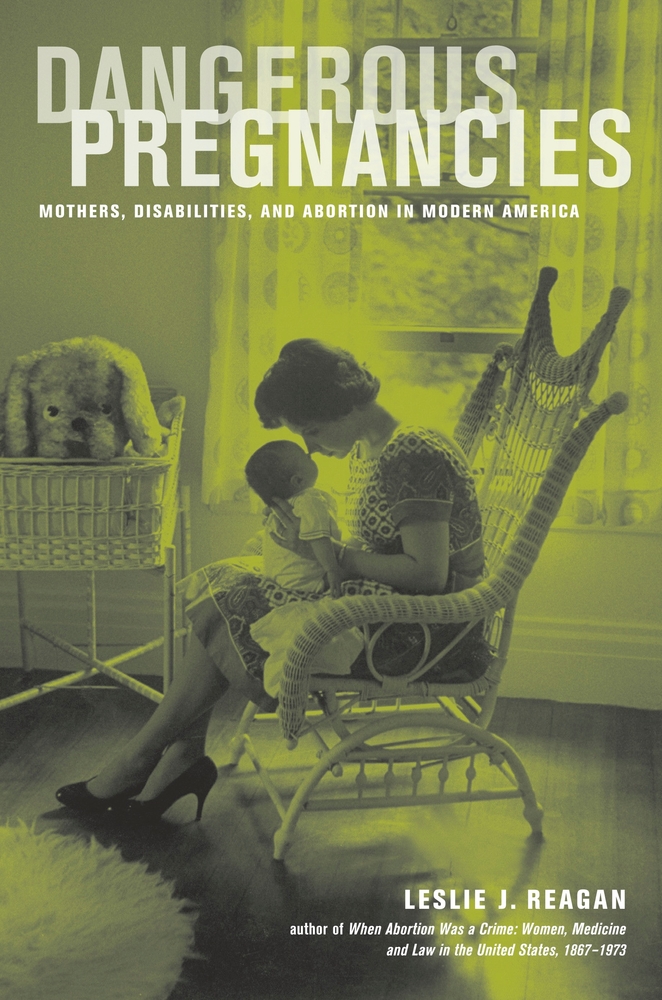
The first book on my reading list was Dangerous Pregnancies: Mothers, Disabilities, and Abortion in Modern America (2010), by my mentor and dissertation committee member, Leslie J. Reagan. Leslie has made a career studying the intersections of law and reproduction, having previously published a book about the criminalization of abortion in the19th century and its decriminalization in the 20th century, and currently researching Agent Orange and birth defects. Dangerous Pregnancies is a good and important book, because it tells the largely forgotten history of German measles as a driver of public debates about women’s reproductive rights and about (children’s) disability rights.
These days, German measles is probably better known as the “R” in MMR (Measles, Mumps, Rubella), but it was originally known by its German appellation, Rotheln. In children, the virus produces an illness like measles, but shorter, with lower fever and a faster, lighter rash. (Rot means “red” in German.) In pregnant women, however, the virus can cross the placenta, infecting the fetus and causing miscarriage, stillbirth, and/or numerous birth defects: blindness, deafness, heart defects, intellectual disability. Adults can catch it without even realizing they are sick.

At first doctors assumed rubella was a mild childhood disease (aka “3-day measles”), but in the 1940s, an ophthalmologist in Australia who saw several cases of congenital cataracts near a military base realized that the virus is teratogenic (causes birth defects). As this knowledge became more widespread, pregnant women who had been exposed through their children, while teaching Sunday School, or working as grocery store clerks started asking their physicians for (therapeutic) abortions. Leslie does an excellent job analyzing how these mothers-to-be viewed the situation as one in which they themselves (in consultation with family, friends, doctors, and religious leaders) had to make a serious decision about whether to end a pregnancy or take the risk of giving birth to a child who could have multiple, severe impairments that would take a heavy emotional and financial toll on the whole family.

You see, although terminating a pregnancy was technically illegal under the Comstock Laws*, the procedure was allowed in instances of rape or for the health or life of the mother. That loophole had been more and less enforced until the 1950s, when physicians and hospitals started regulating themselves. (This was either the moral thing to do or prevented more stringent outside regulation.) They set up medical review boards to judge each case individually. Rich and/or white women could still travel out of the country to secure an abortion, but poor women and/or women of color were often denied one. When a German measles epidemic swept through the United States in the mid-1960s, suddenly even married, middle-class, white women who had come into contact with rubella early in their pregnancies often found themselves without recourse to an abortion-for instance, if the local board were under the control of Catholic doctors who saw no reason to terminate a pregnancy, ever.

Popular media coverage and “wrongful information” or “wrongful birth” court cases described congenital rubella syndrome as “a tragedy” and the babies born with it as “damaged.” By the late 1960s, there was widespread popular support for legalizing abortion, or at least relaxing the rules. But first they became more strict: there developed a tenuous consensus that the procedure should only be performed to save the life of the mother—and German measles didn’t meet that criterion. On the heels of public and professional outrage that women ought to be permitted to make their own health decisions about carrying a (dangerous) pregnancy to term in consultation with their personal doctor, the Supreme Court ruled to legalize abortion in Roe v. Wade (1973) and Doe v. Bolton (1973).

By that time an effective vaccine had been developed (1969) and disseminated, in one of the most successful public health campaigns ever in this country. As Leslie explains, what made the rubella vaccine unique was that it was the first time individuals were encouraged to be vaccinated, not for their own health, but for the health of other people—namely pregnant women and future babies. The vaccine is intended to prevent the birth of individuals with multiple disabilities, but what to do about those who already exist(ed)? Dangerous Pregnancies concludes by opening a discussion into mothers’ efforts to secure an education for all their children, not just the neuro-typical ones, and the passage of the Education for All Handicapped Children Act (1975), now called the Individuals with Disabilities Education Act (1990).

Leslie writes some about the optimism and faith Americans had in science and the government in the mid-20th century: after the atomic end to World War II, after the discovery of numerous antibiotics and two polio vaccines, after a narrow miss with thalidomide, before the end of the Vietnam War, before Watergate. For a brief moment, Americans believed that the “tragedy” of a baby with multiple disabilities could be avoided. Of course it can’t. There is always a 1% risk of birth defects in any pregnancy, and the incidence of Autism Spectrum Disorders is now under 1 in 100. Those babies grow into children and adults who need a lot of care. I would like to be their doctor, and my time at the Central Wisconsin Center gave me valuable experiences with the high quality of care and life enjoyment that individuals with severe disabilities should get and can have.

[I would like to include here the photo I took of a music therapy session at CWC, during which residents and their aides played maracas, felt silky scarves, and spun around in their wheelchairs, but I don't have permission to share their faces on the internet. Just trust me when I say they were by turns stimulated and soothed. It was a joy to watch.]

*--True story: When I first read about Margaret Sanger and the Comstock Laws, probably in my first year of graduate school, I was so shocked that even writing about contraception had been outlawed, that I emailed my undergraduate mentor--the one I was visiting in Madison--and an older friend in graduate school, completely incredulous that in my 21 years, I had never heard of what came before Roe v. Wade.