
One of the reasons I have been relatively quiet on the blog front is that much of my free time for the two years--especially on weekends, what used to be prime blogging time--has been devoted to turning my PhD dissertation into book. I finished the last detail in November 2025, and my advanced author copies arrived on February 1. (This is the unboxing video.) It was officially published on 17 March--12 years to the day since I defended the dissertation--and today we celebrated with a book launch. You can watch the video here.
I'm incredibly grateful to my Division for granting me a part-time contract so that I could devote part of my work week to this project and for throwing me this party. My Big Boss, Division Chief Jane Liebschutz, gave an introduction; I spoke for 15 minutes about the project and why this kind of medical history matters to clinicians; there was Q&A; and we ended with food, book signings, and photos.


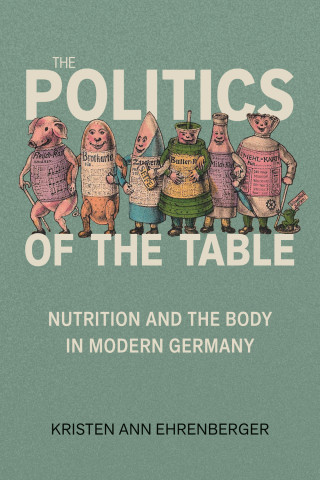
The Politics of the Table: Nutrition and the Body in Modern Germany is a revised version of my PhD dissertation, "The Politics of the Table: nutrition and the telescopic body in Saxon Germany, 1890-1935." It relies on primary and secondary sources in German and English; I did my own translations with the help of online dictionaries and (very rarely, when checking for idioms) Google Translate. I used no AI to compose the text, which consists of 8 chapters, a full introduction and a conclusion, 20 illustrations, and 10 tables. The chapters range from 7,500 to 12,000 words each, for a total of 105,000 words. That is akin to single-authoring ~20 scientific articles (at 5,000 words each)!
Acknowledgments
Introduction: Bodies That Eat and Drink
Part I. “The Kitchen Is the Laboratory of the Housewife”: The Circulation of Nutritional Science, 1890–1930
Chapter 1. From Calories to Vitamins: Nutrition in the Laboratory
Chapter 2. Feeding the Sick: Nutrition and Authority in the Sick Room and the Clinic
Chapter 3. Under the Hygiene Eye: Nutrition at the German Hygiene Museum
Chapter 4. How to Cook Your Vegetables: From the Factory to the Kitchen
Part II. “The Cooking Spoon Is the Scepter of the People’s Health”: Nutrition & and World War I
Chapter 5. “More Than Bitter”: The Blockade and Rationing in Saxony and Bavaria
Chapter 6. “I Am Not a Taste Barbarian”: Food and the Senses During World War I
Chapter 7. Cooking Out but Eating In: The Politics of the Family Table During World War I
Chapter 8. From the Kitchen to the Bedside: Sick Rations in Germany During World War I
Conclusion: Nutritional Knowledge and Ignorance in the Third Reich
Notes
Bibliography
Index
2008-2010 ~ MS1 and MS2 medical student
2010 ~ won the 3 most prestigious dissertation research prizes in my area of interest (chose the DAAD and declined the rest)
2010-2011 ~ research trip to Dresden, Leipzig, Berlin, Munich, and Braunschweig
2011-2014 ~ wrote the dissertation (defense date 17 March 2014)
January-March 2023 ~ sent book proposal and draft manuscript to JHUP
October-December 2023 ~ manuscript accepted and contract signed
December 2024 ~ missed original submission date due to clinical load
March 2025 ~ submitted final manuscript
August 2024 ~ completed proofs
14 November 2026 ~ galleys and index due
17 March 2026 ~ publication date
Chapter 6 on eating and the senses is completely new to the book
I re-researched and completely re-wrote Chapter 9 on wartime sick rations; this is the most original chapter in the book and contributes significant new details on how rations for special populations came about and were managed
All other chapters are shorter and tighter, with some material having been moved between chapters; even with the new chapter, the manuscript is 25,000 words shorter than the dissertation
New ending for the Conclusion
Updated the Bibliography
Changed some of the Illustrations and Tables
Here's the announcement about my first book, written and published in graduate school.


No comments:
Post a Comment
Your comments let me know that I am not just releasing these thoughts into the Ether...