Showing posts with label research. Show all posts

Tuesday, March 24, 2026

What does a physician's signature mean? Celebrating the launch of my book

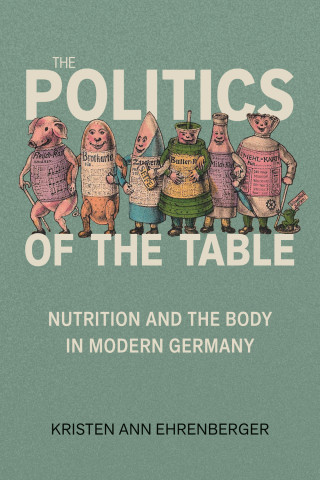
One of the reasons I have been relatively quiet on the blog front is that much of my free time for the two years--especially on weekends, what used to be prime blogging time--has been devoted to turning my PhD dissertation into book. I finished the last detail in November 2025, and my advanced author copies arrived on February 1. (This is the unboxing video.) It was officially published on 17 March--12 years to the day since I defended the dissertation--and today we celebrated with a book launch. You can watch the video here.

I'm incredibly grateful to my Division for granting me a part-time contract so that I could devote part of my work week to this project and for throwing me this party. My Big Boss, Division Chief Jane Liebschutz, gave an introduction; I spoke for 15 minutes about the project and why this kind of medical history matters to clinicians; there was Q&A; and we ended with food, book signings, and photos.


I brought a box full of my favorite books on the history of food, Germany, and/or the World Wars.

The Politics of the Table: Nutrition and the Body in Modern Germany is a revised version of my PhD dissertation, "The Politics of the Table: nutrition and the telescopic body in Saxon Germany, 1890-1935." It relies on primary and secondary sources in German and English; I did my own translations with the help of online dictionaries and (very rarely, when checking for idioms) Google Translate. I used no AI to compose the text, which consists of 8 chapters, a full introduction and a conclusion, 20 illustrations, and 10 tables. The chapters range from 7,500 to 12,000 words each, for a total of 105,000 words. That is akin to single-authoring ~20 scientific articles (at 5,000 words each)!

Table of Contents
Preface. The Menu
Acknowledgments
Introduction: Bodies That Eat and Drink
Part I. “The Kitchen Is the Laboratory of the Housewife”: The Circulation of Nutritional Science, 1890–1930
Chapter 1. From Calories to Vitamins: Nutrition in the Laboratory
Chapter 2. Feeding the Sick: Nutrition and Authority in the Sick Room and the Clinic
Chapter 3. Under the Hygiene Eye: Nutrition at the German Hygiene Museum
Chapter 4. How to Cook Your Vegetables: From the Factory to the Kitchen

Part II. “The Cooking Spoon Is the Scepter of the People’s Health”: Nutrition & and World War I
Chapter 5. “More Than Bitter”: The Blockade and Rationing in Saxony and Bavaria
Chapter 6. “I Am Not a Taste Barbarian”: Food and the Senses During World War I
Chapter 7. Cooking Out but Eating In: The Politics of the Family Table During World War I
Chapter 8. From the Kitchen to the Bedside: Sick Rations in Germany During World War I
Conclusion: Nutritional Knowledge and Ignorance in the Third Reich

Notes
Bibliography
Index

Timeline
2004-2008 ~ developed the idea as a graduate student
2008-2010 ~ MS1 and MS2 medical student
2010 ~ won the 3 most prestigious dissertation research prizes in my area of interest (chose the DAAD and declined the rest)
2010-2011 ~ research trip to Dresden, Leipzig, Berlin, Munich, and Braunschweig
2011-2014 ~ wrote the dissertation (defense date 17 March 2014)
January-March 2023 ~ sent book proposal and draft manuscript to JHUP
October-December 2023 ~ manuscript accepted and contract signed
December 2024 ~ missed original submission date due to clinical load
March 2025 ~ submitted final manuscript
August 2024 ~ completed proofs
14 November 2026 ~ galleys and index due
17 March 2026 ~ publication date

What makes the book different than the dissertation
Introduction has been overhauled for readability
Chapter 6 on eating and the senses is completely new to the book
I re-researched and completely re-wrote Chapter 9 on wartime sick rations; this is the most original chapter in the book and contributes significant new details on how rations for special populations came about and were managed
All other chapters are shorter and tighter, with some material having been moved between chapters; even with the new chapter, the manuscript is 25,000 words shorter than the dissertation
New ending for the Conclusion
Updated the Bibliography
Changed some of the Illustrations and Tables

The Repast series centers on the history of human nutrition broadly conceived. It draws from a variety of fields including history of science, medicine, and public health, food studies and food history, historical sociology, anthropology, and literary studies, as well as work on contemporary topics that engages meaningfully with historical context. There are now three books in the series, which my colleague Andrew Ruiz (University of Wisconsin--Madison) edits.

Here's the announcement about my first book, written and published in graduate school.

Saturday, October 5, 2019

It's That Conference Life


It's that conference life
Scholar do or die
Scholar do or die
Directly from th'archives
Book sellas on the prowl
And the Chair
Oh oh oh
It's that conference life


(With apologies to Ms. Krazie, "Its that gangster life")

Editor's note: I have a chapter in this book, Becoming TransGerman: Cultural Identity Beyond Geography (Peter Lang, 2019).

Saturday, January 5, 2019

What Residency Looks Like LI: Combining the best of both worlds


Should we choose between working and relaxing? No, combine the best of both worlds! Drink a hard cider and listen to blues on the radio while reading those articles for your presentation.

Older

Tuesday, January 1, 2019

Rememberlutions 2018: Here's to the Year that Was


I have a tradition of collecting good memories throughout the year to look back on at the end. 2018's jar was full of ticket stubs and little scraps of paper. Here they are, in no particular order, with some as-yet unpublished photos.

In January, Dear Husband and I thumbed our noses at the frigid temps of the "bomb cyclone" with tropical drinks and friends S.B. and R.B. I also visited my paternal relatives in Charlotte, NC, for MLK Weekend.

In March, we visited family (and alligators!) in Florida for Spring Break. Then M.A.P. (My Awesome Parents) visited, and we ate our way through Allentown.

In April I treated myself to "Potted Potter," a comedic abridged version of the books/movies. We also watched a local production of Jane Eyre at WQED's Fred Rogers Studio. Unfortunately, their Jane was much too feisty for me. In my head, she was quieter and mousier.

In May I traveled back to Champaign for two retirement parties and to see old friends. I want to remember the smell of lilacs there in May.

In June we laughed our @$$es off at The Reduced Shakespeare performance.

In August, DH and I celebrated 13 years of marriage, and in October, 20 years of being a couple. (Flowers above.)

Over Labor Day weekend, DH, friend A.S., and I visited the Art of the Brick exhibit at the Carnegie Science Center, where we geeked out at the amazing things Nathan Sawaya can do with Legos.

In October we memorialized my grandfather with military and Sokol honors (right). Also, being an Elite Yelper for the second year in a row entitled us to attend the best Halloween party in the city.

In December, DH and I joined friends J.H.R. and K.R. at Peter Jackson's British Great War documentary, They Shall Not Grow Old.

I want to remember...
- The intern who thought I was so good I must be a third-year resident (I was a second-year at the time).
- That time I predicted a patient had "sick sinus syndrome" and the electrophysiology fellow disagreed--at first!
- Every time another resident sought my opinion as a colleague.
- Being mistaken for a new attending because of my Palliative Care phone skills.
- How it felt to be challenged to speak to medical students the way I talk to patients.
- Every attending, fellow, intern, and medical student who told me how pleased they were that I was their senior resident.
- Seeing my first Acute Tubular Necrosis (ATN) muddy brown cast under a microscope.
- The second time I took the microphone for Chairman's Report, I did better than the first.
- Playing "Marco Polo" with my attending in his office building.
- When the care manager told me, "You are the best resident at running rounds."
- How much personal growth I underwent while rotating as the Neonatal ICU triage on the way to pediatric Emergency Department sedation resident.
- The repercussions after improperly supervising a medical student doing a HEADS exam.
- The sound of Haendel's Messiah with the Pittsburgh Symphony Orchestra and Mendelssohn Choir.
- Every nurse and every patient who thanked me for my enthusiasm and good doctoring.
- The patient's wife who kissed me on the cheek after  I comforted her.
- That one attending complimented me for writing "fellow-level notes."
- The 90-year-old patient who called me "Dr. Magic" and teased that I had a healing handshake.
- When a colleague stopped me in the hallway to say he doesn't study very much but always enjoys my Teaching Rounds posts.
- That I knocked my research presentation to the Internal Medicine Department out of the park.

Once, three different people in three weeks described me as "a calm team leader." Other compliments included "lifesaver" and "consummate team player." Then there was the time a genetics fellow complimented me months later on doing a really good neurology exam on a patient.

Yes, I really posted a picture of a battery with the caption,
"On RED team, we're positive" in the team room.
I finally lost my Rocky Horror Picture Show virginity.

I also went to trivia sometimes on Wednesday evening. Once I won both a free drink and third place in the competition with a team called "TiKel Me Kristen."

The friend who sent me this note: "Lady, You are valued. You are a force to be reckoned with. You are amazing. Thinking of you."

Baseball games:
Pittsburgh Pirates vs Philadelphia Phillies at Spectrum Field (Largo/Clearwater blog post)
We also watched the Baltimore Orioles lose to the Toronto Blue Jays at Ed Smith Stadium (Sarasota blog post)
Milwaukee Brewers vs Pittsburgh Pirates on Johns Hopkins Alumni Day
Pittsburgh Pirates vs New York Mets on a HOT day at the end of July
Butler Bluesox vs Kokomo Jackrabbits with new friends in the Home of the Jeep

Also, we attended Pitt Gymnastics vs North Carolina State, Temple, and Towson University. This was a neat date, since our third date ever was to a Towson gymnastics meet. We also had a hot date at the hospital cafeteria together.

DH and I shared the experience of a lifetime with some artistic friends at a concert called "Into the Earth" that literally took place IN A CAVE. These are some of the same people with whom we went on retreat, retreat! to Raccoon Creek State Park.

Presenting in Los Angeles with the American Association for the History of Medicine and in Pittsburgh with the German Studies Association. I'll be at both conferences in 2019, in Columbus, OH, and in Portland, OR.

Enjoying the floral displays at the Phipps Botanical Garden for Valentine's Day, in the spring, and the holiday decorations with friend J.B. [post and pics coming!].

Finally, DH and I adopted Rosamunde "Rosie" from the local humane society. She has fattened up nicely, has a beautiful coat and glorious purr, and there will surely be many more photos of her on this blog.

I had HOPED to share I had finally gotten my first solo academic history piece published, but it still hasn't happened yet. I am looking forward to being recruited to join the Pitt faculty without the need for further training (i.e. a fellowship, a medical education degree).


Editor's Note: You can find previous years' blog posts here: 2017, 2016, 2015 Parts 1 and 2.

Friday, September 21, 2018

What Residency Looks Look XXXXII: Showing (Off) Your Work


Sometimes residency looks like showing (off) your work with a friend and colleague at the local medical education conference. We're trying to bring medical education to social media and invite you to follow Teaching Rounds on Facebook or Tumblr and @MedEdPGH on Twitter.

Older

Friday, April 20, 2018

What Residency Looks Like XXIII: Clinical Pearls


I recently had the honor of presenting the pre-intervention survey results of my research group's project on medical education on social media. This was our title slide. You can find us on Facebook and Tumblr at Teaching Rounds, and on Instagram and Twitter at Med Ed Pittsburgh. More pics on Twitter @MedEdPGH.

Older
Newer

Friday, February 16, 2018

What Residency Looks Like XVII: On display


Sometimes residency looks like a poster presentation about your group research project on medical education on social media.

Older
Newer

Thursday, January 4, 2018

What Residency Looks Like XII: A Little Light Reading

Sometimes residency looks like falling down a rabbit hole researching an interesting disease after you, a fellow, a visiting resident, and a medical student show up to see clinic patients with the attending, but all of the morning patients no-show.


Older

Wednesday, June 21, 2017

What Internship Looks Like XL: Historical Dietetics Noon Conference

Me at the podium; photo credit M.V.
Sometimes internship looks like giving the very first noon conference to the new Pediatric interns. In the first part I made an argument for the usefulness of medical humanities to clinical medicine (aka "why I did not waste 8 years of my life earning a PhD"); in the second part I presented a case study of two little boys who took sick in Dresden during World War I; and in the last part I explained the current clinical guidelines for the treatment of acute gastroenteritis (the BRAT diet is no longer "state of the art" when treating vomiting and diarrhea).

At Housestaff Lunch later in the week, a very kind senior resident submitted a kudos that was shared with the whole program:

Kudos to Kristen Ehrenberger for her awesome noon conference this week - your fun and enthusiastic ability to blend historical context with practical recommendations made for an awesome hour. What a great way to kick off the year for the new ‘terns!  P.S. I would fund a kickstarter for a weekly “Medical Story Time with Dr. E”


Older
Newer 

Tuesday, June 13, 2017

Book Review: Feeding the Nation Left a Sour Taste

In my last blog post, I described an academic study of hunger, food, and cultural racism in twentieth-century South Africa that is so prize-winningly good that it intimidated me as a writer. Let's just say that the next book I picked up engendered just the opposite feelings. For a book with a title like Feeding the Nation: Nutrition and Health in Britain before World War One (2010), I can't believe it wasn't on my radar before this spring. But Yuriko Akiyama's dissertation/first book seemed to promising that I went ahead and purchased it. Her argument is simple: cookery teachers, nurses, and other "educationists" (a British word I had to look up that means "educators") taught nineteenth- and early-twentieth-century Britons both nutrition and hygiene through lessons about food preparation and consumption. 

The Accomplisht Cook, or the Art and Mystery of Cookery
(because the last image of "Books for Cooks" from the British Library corrupted)

However, Akiyama conflates teaching with learning. This is pitched as a study of reception, but she offers precious little data about what the trainees thought of their lessons. I don't really fault her for that, because designing a reception study is hard (I know, I've tried); the answer is to frame your work as a discussion of other people's discussions, of what they wanted to convey. Unfortunately, she seems to take many of her primary sources at face value, blithely recounting their letters, speeches, and booklets. This may be one reason why the timeline of events in each chapter is so confusing: because each author rediscovered the importance of food for health in order to justify the importance of their particular program, it seems like the thread of the argument that cookery was recognized as important for the health of individuals and the nation is constantly being dropped and picked up again. She sometimes explains a particular idea as "now/suddenly/finally" being perceived as important once some reform has happened, which neglects the interest that had to exist beforehand to generate the political and social will for that reform. It also doesn't help that she argues for the importance of Florence Nightingale in the development of cookery and hygiene and then mentions at one point that real change required 30 years. In the long duree that's nothing, but in real time three decades an entire generation.

The other difficulty that arises from Akiyama taking her sources at face value is that she adopts their disapproving, reformist tone, especially toward the lower classes. Although she includes such important details as the fact that many poor Britons lived in hovels or tenements without private cooking facilities, she nevertheless makes comments about how uninformed and unhygienic they were. She confuses lack of knowledge with lack of will or ability, when there were manifest structural and institutional hindrances. This is important, because on the one hand she argues that the army taught every man to cook his own rations to ensure that nutrients would not be wasted by an inexperienced (non-British/foreign) cook, and then later she notes that the navy trained professional cooks so that all sailors could benefit from good, hygienic food. Somehow both are supposed to convey the same message about the importance of diet on health, when I suspect the army was mostly concerned about cost cutting. I will concede her one point though, which is that just because hygienic structures and routines have been created doesn't mean that individuals will absorb the lesson (I think of soldiers defecating outside of their tents because it's more convenient than going to the communal latrine).

The best part of the book is that she tried to cover a variety of sites: schools for cookery teachers, elementary schools, hospitals and nursing schools, training for soldiers and sailors. In this way she covers girls and boys, women and men. I wish she had spent more time on the recipes that were taught, rather than talking about the educational institutions, but then I would have written a different book. And maybe I will.

Tuesday, April 11, 2017

What Internship Looks Like XXXVII: Lounging Around


Sometimes internship looks like hanging out in the residents' lounge to read articles for a literature review on the use of social media for life-long learning in medicine.

Older

Friday, March 18, 2016

I Matched!

After months of applications, interviews, and waiting, I am pleased to announce that I have matched in Internal Medicine/Pediatrics at University of Pittsburgh Medical Center (UPMC). This is a combined residency program that smashes six years of training in adult and child medicine into four years. Med/Peds is still the shortest program I could find to let me get out into practice to do what I love after twelve years of graduate and medical school. Doctors who complete this pathway can either become specialists or work in primary care. I intend to do both by entering a niche called "complex care" that includes both diagnosing and treating rare diseases in the hospital and taking care of individuals with multiple life-long health-care needs in the clinic. I imagine my target population as kids with developmental disabilities and related conditions (such as cerebral palsy or Autism Spectrum Disorder)--and their families. Once they age out of their pediatrician, they can still see me, since I will be double boarded in Internal Medicine and Pediatrics.

If you are following along on my Medical Grand Tour, UPMC was one of the last places I interviewed. By January I finally had an idea of what kind of career I want, and what kind of training I need to get there. Med/Peds at UPMC offers all that in an academic medical center--and the #8-ranked children's hospital in the nation--and infrastructure already in place to support the medical humanities--in a mid-sized Midwestern city on the water (three rivers, to be exact). An up-and-coming place, Pittsburgh is five hours from Dear Husband's family and four hours from mine, so the location couldn't be better. Really, it was a no-brainer. So for the last two months, I've been waiting to confirm what I already suspected: that I had found my match, and I didn't even have to kiss a frog. (The mosaic below is from the Pittsburgh Children's Hospital.)


The official photographer didn't get any photos of me making the announcement (how rude!), but you can watch me do so on YouTube by clicking here.

If you're curious how this whole Match thing works, Dear Husband wrote a blog post you can find on the Pianonoise blog.

Click here to see where my classmates matched!

Tuesday, February 9, 2016

What is the Opposite of Nostalgia?

As graduation and moving approach, I am trying to divest myself of old paper journals, unloved knickknacks, and the detritus of sixteen years of college, graduate, and medical school. Next to my desk I found a thick stack of lined index cards, a handwritten bibliography of figures from German medical history that I compiled from microfiche (microfiche!) about a decade ago, before my first laptop, before the Deutsche Biografie went online, and before the Sächsische Biografie was compiled. Reliant as I am on my computer's search function, I have no nostalgia for the way I would have written my dissertation in the pre-internet age.

Tuesday, November 24, 2015

Images of Research, Take 2

Update: My entry was one of twenty-five semi-finalists in the 2016 Image of Research competition!

Editor's Note: While I was working at the archives and libraries in Germany, I entered a photography contest for images of research. That image didn't win. I have decided to try again.


Inside My Insides


The questions that drive my research are, How is medical and scientific knowledge created? How does it circulate? In my dissertation, I looked specifically at ideas about food and bodies in late-nineteenth and early twentieth-century Saxon Germany. I believe that knowledge about bodies extends along a spectrum from recognized experts like physicians to laypeople and patients, who know their own bodies best. This is an image of the “anatomical flap doll” in Friedrich Eduard Bilz’s extremely popular manual, The New Naturopathy: Text- and Reference Book of Natural Healing and Hygiene (1925). Far from anatomical or physiological knowledge being the sole property of doctors and scientists, it actually circulated widely in traveling hygiene shows and books such as this one. Germans assimilated facts about calories and the digestive system, opinions about what a healthy meal looks like, and statistics about agriculture and public health into a mental model of the German nation comprised of German citizens that I call “the telescopic body.” This body concept stretched from the molecular through the communal to the (inter)national and informed medical practice, social movements, and political decisions. Rather than merely having an inside and an outside, the telescopic body’s insides had insides.

I took this photograph in the library of the GermanHygiene Museum in Dresden.

Monday, November 2, 2015

What Medical School Looks Like XXIII


Sometimes medical school looks like this stunning view of Baltimore's Inner Harbor while writing a mock phone case scenario, reading a student's weekly case report, and reviewing a manuscript on the history of pediatric surgery.

Older

Thursday, July 2, 2015

What Do Library Science, History, & Civil Engineering Have in Common? On Location Part 1 of 2

Editor's Note: Over the years long-time readers will have noticed that I frequently refer to the campus faith group with which Dear Husband and I celebrate holidays (some religious, some not), play games, and do arts and crafts. We are an eclectic group of "graduate students and like-minded persons" who meet weekly during the academic year to discuss books or videos. During the summer we sometimes offer alternative programming. This year, we are visiting our respective buildings around campus to learn about each other's research. Here is a sampling of the visits thus far.

The first week, a recent graduate of the library school took the group to the Rare Book Room to marvel at unique texts--such as a 1976 draft of the Star Wars script in which Luke Skywalker is still named "Luke Starkiller"--and very old ones, such as a book from the Cavagna Collection, Per la facciata del Duomo di Milano (ca. 1657) (below). This collection of opinions about architectural renovations to Milan's cathedral has what amounts to the papermaker's version of a footprint in fresh concrete: a handprint made while the paper was still wet. You can see more images, learn about making paper in the early modern period, and read about the Milanese cathedral blueprints in this blog post.

I led the next tour, representing history. We traipsed through four of the five stories of the big old building that houses my department. In one of my old classrooms, we stopped to do an exercise I learned in a German course and have used to good effect in history classes: we put up pictures on the walls and "visited a gallery." This gallery had portraits of Jesus: Jesus looking holy in Warner Sallman's ubiquitous "Head of Christ," Jesus teaching in a Rembrandt, and Jesus doing both at the same time in the Christ Pantocrator (Christ the Savior) icon from the 6th century... Check out the  picture above. The right side of his face is calm, and he lifts his hand in a gesture of blessing and teaching. The left side of his face is stern, and he carries a heavy Bible for instruction. This particular image is the oldest version of a common Orthodox icon and can be found in Saint Catherine's Monastery near Mount Sinai in Egypt. Then we went out for ice cream.

Finally, the group went to the civil engineering building, where we started by ogling the cranes, earthquake simulation center, and concrete canoes. (Yes, you read that correctly.) Our guide showed us the special material he studies with a super-high-tech microscope that can zoom in reeeeeeeeeeaaaaaaaaaaaallllly close to the surface of a specimen. He uses a diamond to stress the material, measures various parameters, and develops models for understanding these things. Then we went out for Indian food.


It turns out that what Library Science, History, and Civil Engineering have in common are graduate students excited about their research and eager to share it to build a community of faith. Check back later for more summer tours!

Monday, June 22, 2015

Nutrition Myths: Past & Present

I had the great honor and pleasure of delivering the June Internal Medicine Grand Rounds lecture. It has two parts. First, I introduce the history of medicine as a discipline and make an argument for why I did not waste eight years of my life pursuing a PhD in history. Then, I use short vignettes from the development of modern nutrition in Germany around World War I to explain three contemporary myths drawn from the longer list set forth in the “Nutrition Myths and Healthy DietaryAdvice in Clinical Practice.” One theme is the observation that one generation’s scientific fact is often the next generation’s scientific myth. For those of you who missed it, here is a slightly expanded version.


(Turn up your speakers to hear me better.)

Friday, April 17, 2015

Blue-Ribbon Medicine

Over the course of my third year in medical school, I have become proficient in a number of genres of medical writing: the long History and Physical (H&P), the short SOAP note (subjective data, objective data, assessment, plan), and verbal report. This past month I learned a new one: the clinical vignette. It's a five-minute power-point presentation that uses a case study to teach something new, interesting, or important to other medical practitioners.

Every year the medical school holds a day-long research symposium with research talks, posters, and clinical vignettes. I had an interesting case while on pediatrics and decided to write it up. The key to preparing a good vignette is paring down the amount of data to the bare minimum, given the 5-minute time limit. Above all, I tried to put as few words/lines per slide as possible. After talking with one of the chief residents, I also devised a nifty table for dividing the evidence into pertinent positives and negatives. (Putting together the slides was the subject of What Medical School Looks Like XI.)

Dear Husband was a great sport and let me practice on him a couple times, even though he didn't really understand what I was talking about. At the end, he pronounced me "multi-lingual" in English, German, and "medical."

The symposium is a competition, and I was the last speaker of the day. I thought the talk went well but not perfectly. However, it was good enough to beat out several residents and a couple of enthusiastic first-year medical students for the blue ribbon for Best Clinical Vignette. (Apparently, there's a check in mail!) For the curious, I've included the abstract below.

"Breaking the Rule of Twos"
The most common congenital malformation of the gastrointestinal tract, Meckel's Diverticulum is a remnant of the omphalomesenteric duct. The rule of twos says that a Meckel's Diverticulum is ~2 inches in length, has 2 types of heterotopic mucosa, occurs less than 2 feet from the ileocecal valve, is found in 2% of the population, and presents with painless GI bleeding by 2 years of age with a 2:1 male-to-female ratio. However, it can be found in older patients.

A 14-year-old boy with asthma and viral pharyngitis the previous week presented to the ED with an 8-hour history of multiple episodes of non-bloody, non-bilious watery diarrhea, multiple (near) syncopal episodes, and a fall in the bathroom with closed head trauma. Some crampy periumbilical pain had resolved, but in the ED he had one bloody stool. He denied nausea, vomiting, fever, rash, sick contacts, and recent travel. Past surgical history was notable for circumcision and unilateral cryptorchidism status post orchidopexy. Family medical history was notable for maternal Irritable Bowel Syndrome and possible Rheumatoid Arthritis. Although EMS reported a SBP in the 70s, by the time he was seen in the ED, his vitals were essentially stable. On physical exam the patient appeared pale and fatigued with a capillary refill of 2-3 seconds. Abdominal exam was positive only for lower abdominal tenderness to palpation. CBC found a hemoglobin of 10.3 g/dL. Upon consultation with Pediatric Gastroenterology, a technetium 99 scan was performed. It revealed a Meckel's Diverticulum with active gastric mucosa. One unit of packed red blood cells was administered for anemia. General surgery was consulted, and the diverticulum was excised laparascopically with elective appendectomy. After 1 week in the hospital, the patient was discharged to home with Norco PRN for pain.

This case demonstrates an unusual presentation for Meckel's Diverticulum: in an adolescent with mild abdominal pain, a single episode of melena, and syncope secondary to volume loss and severe anemia. Most individuals with a Meckel's Diverticulum are asymptomatic, but the 25% with atopic gastric mucosa can present with painless GI bleeding, (repeat) intussusception, or with a false case of "appendicitis." Heightened clinical suspicion led to diagnosis via Meckel scan, which has a sensitively of 85%, specificity of 95%, and accuracy of 90%. Treatment is surgical excision.

TL;DR This kid had an extra piece of intestine from where his belly button formed that didn't cause him any problems for years until it started making stomach acid that ate into his gut and made him poop blood. A team of doctors figured it out and cured him with surgery.

Wednesday, April 15, 2015

What Medical School Looks Like XII

Sometimes medical school looks like second-year medical students wearing plastic leis and blowing bubbles. Red clown noses and Chinese finger traps might also have been involved.

We were learning about healthy ways to handle stress and appropriate ways to use humor in medicine.

These students had just had their psychiatry final exam the day before, and they were understandably nervous about both their grades and catching up with studying everything else. In addition, most are counting down the weeks until their first board exam (Step 1) and feel overwhelmed.

I shared what I had learned about avoiding burnout as a third-year medical student: I only work six days a week, five if I can. As a graduate student without a lab or office on campus--and being too cheap to pay for food to work in a cafe--I wrote my dissertation at home. I felt as if I were "always" working. But I easily gave into distractions, so really I was always "working."

Now that I am doing clinical rotations, I work five to six days per week in the office or hospital. There is some but not much down time, so I feel more productive during the day. I try to study at least two hours in the evening. On weekends, I do household chores and work on side projects, like presentations. I told the second-years, "I cannot be a medical student seven days a week. I don't want to be a medical student 24/7. For my sanity, I need to be not-a-student on the weekends so that I look forward to resuming clinical duties on Monday morning." In other words, I have discovered the necessity of a Sabbath, thereby saving me from burnout. And I still pass all my tests.

However, with the next set of board exams just months away (Step 2), let's see how much of my own advice I take!

Older

Friday, April 10, 2015

What Medical School Looks Like XI


Sometimes medical school looks like eating a make-shift dinner of cheese & crackers, carrot sticks, and trail mix while editing a clinical vignette Power Point presentation on the travel bus after a day of inter-professional simulation/training at the sister medical school in a city 2 hours away.

This presentation later won first prize for a clinical vignette at the research symposium!

Older