Showing posts with label Germany. Show all posts

Saturday, May 16, 2026

May Memories, Part I

I have taken so many more pictures than I have shared to Facebook over the last month, so I thought I would put some of them together here in a post written after eating a delicious spring-like lunch (salad and Triskets with brie; the secret is Green Goddess dressing). It feels so good to sit at the dining room table--while Dear Husband eats lunch and watches soccer in the next room--with my wet braid hanging between my shoulder braids, refreshed from a shower after three hours of trimming bushes and pulling weeds and raking up the long grass left by the mower, fueled only by NPR radio on my phone, since I skipped breakfast. That's okay: more room for a piece of the heaping strawberry pie DH baked this morning. It's my turn to have the kitchen for the afternoon: I will watch Persuasion on Netflix Legally Blonde on YouTube while I make banana bread with the over-ripe bunch I brought home from the office.

The first weekend I attended two films at the Jewish Film Festival on the Carnegie Mellon Campus. Validity is a Pittsburgh-produced film starring my colleague's sister as a scientist struggling with whether to use unethically sourced data about hypothermia collected on concentration camp prisoners. It's based on an actual person and controversy, and I don't know why the film's promotional material didn't name Robert Pozos's work at the University of Minnesota (perhaps he asked them not to?).


Meanwhile, Dear Husband was playing and conducting a choral service at church with the Schubert Mass in C (WordSung).


That afternoon I hung out at the main Carnegie Library before watching Disposable Humanity, a documentary about the Aktion T4, when healthcare providers helped the Nazi government sterilize and kill disabled Germans. Theirs are the only Holocaust victim names that by law have to be redacted, as if it is still so shameful to have been diagnosed with a disabling condition that it would be embarrassing for yourself or your family to have it known.


The second weekend I drove to National Harbor, MD, for the Society for General Internal Medicine conference. I didn't actually stay at the expensive hotel, having snagged a bedroom in an AirBnB across the street and through the fence. It was awkward if I had to run back in the middle of the day for some reason, but parking was free, and I could afford it without a roommate.


I attended a variety of panels--on reproductive health for adults with intellectual and developmental disabilities, treating osteoporosis, culturally competent nutrition, and fibromyalgia--and helped present a workshop on taking care of adults with Down Syndrome.


I brought a bunch of "I <3 medical history" ribbons to leave at check in and was gratified to find someone wearing one. (Even though you can't see either of ours in the picture!)


I had resolved not to play trivia again after winning two years in a row and then joined an unlikely table at the back of exhibitors from Team Health. Team Stealth ended up coming in 2nd place! 


After the conference I attended the wedding of my residency cohortmate. The next morning, I met a colleague for breakfast in Old Town Alexandria to discuss our respective books and then enjoy the art studios at The Torpedo Factory. After Mother's Day lunch with My Awesome Parents, it was an easy drive back to Pittsburgh listening to Anthony Doerr's All The Light We Cannot See. (It was okay.)


I'll leave you with a panoramic view of Pittsburgh from the back deck of one of the residents, who lives on the South Side and hosted journal club. There was a break in the rain just long enough for us to go out and marvel at the city spread out before us.


Tuesday, March 24, 2026

What does a physician's signature mean? Celebrating the launch of my book

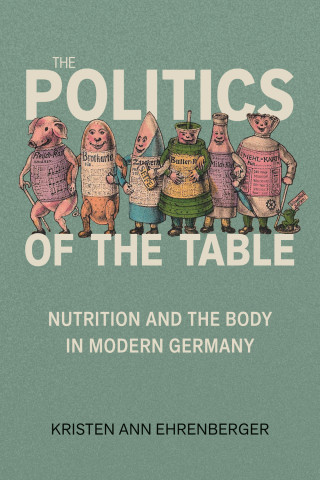
One of the reasons I have been relatively quiet on the blog front is that much of my free time for the two years--especially on weekends, what used to be prime blogging time--has been devoted to turning my PhD dissertation into book. I finished the last detail in November 2025, and my advanced author copies arrived on February 1. (This is the unboxing video.) It was officially published on 17 March--12 years to the day since I defended the dissertation--and today we celebrated with a book launch. You can watch the video here.

I'm incredibly grateful to my Division for granting me a part-time contract so that I could devote part of my work week to this project and for throwing me this party. My Big Boss, Division Chief Jane Liebschutz, gave an introduction; I spoke for 15 minutes about the project and why this kind of medical history matters to clinicians; there was Q&A; and we ended with food, book signings, and photos.


I brought a box full of my favorite books on the history of food, Germany, and/or the World Wars.

The Politics of the Table: Nutrition and the Body in Modern Germany is a revised version of my PhD dissertation, "The Politics of the Table: nutrition and the telescopic body in Saxon Germany, 1890-1935." It relies on primary and secondary sources in German and English; I did my own translations with the help of online dictionaries and (very rarely, when checking for idioms) Google Translate. I used no AI to compose the text, which consists of 8 chapters, a full introduction and a conclusion, 20 illustrations, and 10 tables. The chapters range from 7,500 to 12,000 words each, for a total of 105,000 words. That is akin to single-authoring ~20 scientific articles (at 5,000 words each)!

Table of Contents
Preface. The Menu
Acknowledgments
Introduction: Bodies That Eat and Drink

Part I. “The Kitchen Is the Laboratory of the Housewife”: The Circulation of Nutritional Science, 1890–1930
Chapter 1. From Calories to Vitamins: Nutrition in the Laboratory
Chapter 2. Feeding the Sick: Nutrition and Authority in the Sick Room and the Clinic
Chapter 3. Under the Hygiene Eye: Nutrition at the German Hygiene Museum
Chapter 4. How to Cook Your Vegetables: From the Factory to the Kitchen

Part II. “The Cooking Spoon Is the Scepter of the People’s Health”: Nutrition & and World War I
Chapter 5. “More Than Bitter”: The Blockade and Rationing in Saxony and Bavaria
Chapter 6. “I Am Not a Taste Barbarian”: Food and the Senses During World War I
Chapter 7. Cooking Out but Eating In: The Politics of the Family Table During World War I
Chapter 8. From the Kitchen to the Bedside: Sick Rations in Germany During World War I
Conclusion: Nutritional Knowledge and Ignorance in the Third Reich

Notes
Bibliography
Index

Timeline
2004-2008 ~ developed the idea as a graduate student
2008-2010 ~ MS1 and MS2 medical student
2010 ~ won the 3 most prestigious dissertation research prizes in my area of interest (chose the DAAD and declined the rest)
2010-2011 ~ research trip to Dresden, Leipzig, Berlin, Munich, and Braunschweig
2011-2014 ~ wrote the dissertation (defense date 17 March 2014)
January-March 2023 ~ sent book proposal and draft manuscript to JHUP
October-December 2023 ~ manuscript accepted and contract signed
December 2024 ~ missed original submission date due to clinical load
March 2025 ~ submitted final manuscript
August 2024 ~ completed proofs
14 November 2026 ~ galleys and index due
17 March 2026 ~ publication date

What makes the book different than the dissertation
Introduction has been overhauled for readability
Chapter 6 on eating and the senses is completely new to the book
I re-researched and completely re-wrote Chapter 9 on wartime sick rations; this is the most original chapter in the book and contributes significant new details on how rations for special populations came about and were managed
All other chapters are shorter and tighter, with some material having been moved between chapters; even with the new chapter, the manuscript is 25,000 words shorter than the dissertation
New ending for the Conclusion
Updated the Bibliography
Changed some of the Illustrations and Tables

The Repast series centers on the history of human nutrition broadly conceived. It draws from a variety of fields including history of science, medicine, and public health, food studies and food history, historical sociology, anthropology, and literary studies, as well as work on contemporary topics that engages meaningfully with historical context. There are now three books in the series, which my colleague Andrew Ruiz (University of Wisconsin--Madison) edits.

Here's the announcement about my first book, written and published in graduate school.

Sunday, October 8, 2023

Montreal, Take 2

Way back in early graduate school, I attended a history of medicine conference in Montreal. However, to my lasting regret, I only left the hotel once, to get drinks with a group, and I never saw the city itself. I rectified that lack of curiosity at the most recent German studies conference, arriving early to have a half day of sightseeing, and planning my schedule to leave time to catch up with friends new and old.

The conference hotel was in the more-English-speaking part of downtown Montreal, and it impressed me as an urban space (with a Metro!) unlike Pittsburgh, which seems gritty in some specifically American way, whereas this is clearly a European-inflected place, from the architecture to the buskers.

After checking in, I took myself to lunch at the Jean-Talon Marché, named for the first French administrator, Jean Talon (1726-1694). Marveling at the stalls with their produce, cheese, meats, books, flowers, etc., somehow the cartons of tomatoes, potatoes, lemons and limes, or onions were equally beautiful whether there were arranged with like colors or in alternating bands. I thought of Emile Zola's novel The Belly of Paris (1873) and hoped there was a lot less despair and intrigue. It certainly helped that it was sunny and above 80F/30C.


I had a salmon pie for lunch, picked up apples and clementines for snacks and breakfasts, and selected some baclava for dinner with a friend the next night. With a strategic purchase from Starbucks so I only had to stand in that long, snaking line once, granola bars from home, cookies from the airplane, and free tea from the hotel, I hoped to have to buy myself lunches and the occasional dinner, depending on the robustness of the evening receptions.

Then I made my way to and through the Old Town (Veaux Ville). There was a brass band playing in the middle of Place Jacques-Cartier, at the foot of the monument in the middle of this shot. I stopped by the Chateau Ramezay, the first historical building in Montreal which had served as governor's residence, business headquarters, army billeting, courthouse, normal school, university, and coin museum. 


I had planned to catch the 2pm tour in English, but a colleague wanted to meet at the Ferris wheel (La Grand Roue de Montreal) in the Old Port at 3pm, so I just buzzed through the gift shop and walked the garden (pictured). 

Old Port of Montreal

The leaves have started changing colors, but the sky was blue and the temperature warm. We caught each other up on our lives since our joint publication came out in February/March while enjoying great views of the city and port beneath us.

Then we walked to the Notre-Dame Basilica. It was built in the 1820 and the interior redecorated in the 1870s. Inside the brilliant blue ceiling stands out, but all of the walls are painted and gilded, and there are statuary everywhere, even Ezekial and Jeremiah carved into the base of the pulpit, which hasn't been used since Vatican II. Here's also a photo of the 1891 Casavant Freres organ for Dear Husband; has 7,000 pipes from 1/4 inch to 32 feet feet tall. It was quite dark inside, and we wondered how the congregation could have seen or appreciated all these details with sunlight through the few windows and then candle or gaslights. Now the cathedral hosts a music and light show in the evenings for twice what we paid to see the interior during the day. 

The alter has Jesus on the cross at the center and is flanked by 4-5 other "altar scenes": Moses prays over the Ark of the Covenant, Aaron immolates a lamb, Abraham sacrifices Isaac, and Melchizedek offers bread and wine, and below all that is The Last Supper. 

The stained-glass windows from the 1920s (and some of the statues) feature important citizens in Montreal's past, including a number of women.

Then we joined the rush-hour traffic on the Metro back to the hotel for the opening reception, where I bought a couple of books and chatted up the representative of the junior-year-abroad program through which my parents met and which is still going strong in Munich.

Finally, I joined Arts Night, a very good presentation about a new graphic novel about 4 children's Holocaust stories, illustrated from survivors' stories. I bought myself the book and read it during down times at the conference.


20-ingredient salad from Siam [Thai Restaurant]

It truly was wonderful to feed the scholarly and friendship parts of my soul. Somebody I had just met asked if I didn't attend very often because this is (no longer) my primary job, but I told her that, on the contrary, it was that much more important for me to do. I attended panels on women in interwar Vienna, diversity in language instruction, domestic design in the early 20th century, Asian-German comics, how to hold an  accessible conference, non-White embodiment, ETA Hoffman's fairy tales, medieval illustrations, and 21st-century German streaming "tv."


Not pictured: baklava that was worth waiting to eat.


Progress on a new "miscounted cross-stitch design of a brain and flowers"

The one regret I have is that the representative from the University of Toronto Press did not bring hard copies of the journal issue I co-edited that was published early this year. Because my dissertation / book project has been on the back burner for so long that it threatens to evaporate, I wanted to have a photo of proof of my productivity, as a URL just isn't the same. No luck.

I delivered the commentary on one of the last panels of the day and then left before the last question had been answered to make it to the airport for the last flight toward home.

Next year: Atlanta. Maybe I'll have a(nother) book by the time we get back to Washington, DC?

Thursday, November 17, 2022

"Cholera and Fear" / "Die Cholera und die Furcht"

"'Tis the season," said one of my colleagues, to explain the sudden influx in gifts from patients in a single morning clinic session. One woman who "stress bakes" brought her provider a veritable pyramid of goodies. Others picked up pre-packaged chocolates: foil-covered milk-chocolate balls, Ghirardelli squares, locally famous Sarris chocolate-covered pretzels. You can see that by the end of the day, we had made significant in-roads.


The same morning, the parents of one of my special-needs patients gave me a jar of home-made, preservative-free plum jelly. His father reassured me that he was evidence it was safe, as he had eaten it for years. I did once throw away the fish spread a patient made because my colleague pointed out it was made from "bottom-feeders" who consume who-knows-what, but I felt safe putting this on a bagel with cream cheese. It has an interesting sour-sweetness, and I am delighted they thought of me. Why, then, did I photograph it with my most recent column in the local medical society magazine? Because the parents mentioned they had seen my name in it while picking up the mail for a friend, read the poem and my translation, and were impressed. Since it has already come out, I will share it with you here.

„Die Cholera und die Furcht.“ Von Hermann Friedrichs.           

Schwüle Nacht—Am Thor der heil’gen Stadt,
Die einst Welt und Geist geknechtet hat,
Pocht ein Fremdling mit dem Schwertesknauf:
,,Hollah, Pförtner, schlieβ daβ Thor mir auf!“
            Schaurig dröhnt der Ruf durch Nacht und Graun,
Und des Wächters helle Augen schaun
Forschend in des Pilgers Angesicht:
,,Deiner Stimme, Fremdling, trau‘ ich nicht!
Harre drauβen bis der Morgen graut—
Diese Stadt hat Gott mir anvertraut!“
,,Gott ja sendet mich!“ ruft Jener wild.
,,Komm und prüfe meinen Wappenschild,
Hab‘ vor kurzem erst ihn aufgefrischt,
Wo der Nildunst mit dem Smum sich mischt—
Emsig mäht mein Schwert, wenn ich es schwinge,
Fiebergluthen stählen seine Klinge!“
            ,,Doch der Pförtner, vor Entsetzen bleich:
,,Dennoch,‘‘ spricht er, ,,wehr‘ ich dir mein Reich,
Leistet du mir nicht den heil’gen Schwur,
Mir zu nehmen tausend Seelen nur.
Denn ich weiβ, du bist ein Nimmersatt,
Schafft gern mehr, als Gott geboten hat.“
            Jener schwört. Der Pförtner läβt ihn ein.
Düster schleicht ein Schatten hinterdrein—
Eine Alte, bleich und abgezehrt,
Mit des Allgewalt’gen Schild beschwert.
            Fragend miβt der Pförtner die Gestalt,
Doch ihr Blick durchzuckt ihn meh und kalt—
,,Gott, erbarme dich der tausend Seelen!“
Spricht er schauernd, ,,laβ sie dir empfehlen!“
            Wochen flohn—Die Stadt füllt Schreckt und
Graus.
            Wild, verzweifelnd schaut der Pförtner aus
Nach den Bahren, die vorüberziehn,
Nach den Bürgern, die der Stadt entfliehen.
Heiβ durchwühlt die Adern ihm der Zorn,
Ihn verwundert bangen Zweifels Dorn.
Immer neue Bahren ziehn vorbei,
Immer lauter hallt das Wehgeschrei.
Ach! schon fünfmal tausend liegen todt,
Und noch immer mehrt sich Leid und Noth.
            Endlich kehrt der Gottgesandte wieder,
Läβt zur Rast sich mit der Alten nieder;
Doch der Pförtner fährt ihn grimmig an:
,,Tausend, schwurst du, ungefüger Mann!
Und du brachst den Eid?“
                                                Der Andre spricht:
,,Nein! Denn mehr als tausend schlug ich nicht!
Was darüber, nahm dir diese da,
Stets, auf Schritt und Tritt, war sie mir nah—”
            ,,Und wer ist dies Scheufel?“
                                                ,,Blicke hin,
‘s ist die Furcht, die schlimmste Würgerin!“

 ~ * ~ * ~ * ~ * ~ * ~ * ~ * ~ * ~ * ~ * ~ * ~ * ~ * ~ * ~ * ~ * ~ * ~ * ~ * ~ * ~ * ~ * ~ * ~ * ~  

“Cholera and Fear.”  By Hermann Friedrichs.

On a humid night that oppressed matter and spirit, a stranger banged on the door of the holy city
with the pommel of his sword. “Hollah, porter, unbar the gate for me!”
            The shout boomed gruesomely through the night, and the guard’s bright eyes looked searchingly at the pilgrim’s countenance: “I do not trust your voice, stranger! Wait outside until the morning dawns—God has entrusted me with this city!”
            “It is God who sends me!” replied the other roughly. “Come and examine my escutcheon [crest]. I’ve just cleaned it where the Nile miasma and desert sandstorm mingle. My sword reaps assiduously when I swing it, [for] the heat of fever hardens its blade.”
            The porter blanched at the horror: “Nevertheless,” he said, “I will defend my territory against you, if you do not render me the holy oath, that you will only take a thousand souls. Because I know that you are a glutton who likes to do more than God has allowed.”
            The other swore. The porter let him in. Grimly skulked a shadow behind him—an old woman, pale and emaciated, burdened with the shield of the omnipotent one.
            Questioningly the porter eyed the figure, but her stare seared through him, painful and cold. “God, embrace the thousand souls!” he shuddered, “May they be commended to your care!”
            Weeks flew by, and the city filled with terror and dread. The porter watched with fury and despair as the stretchers passed by and as citizens fled the city. Hot anger coursed through his veins, as the thorn of doubt deeply wounded him. Always new stretchers went by, always louder rang the painful cries. Ach! Already five times a thousand lay dead, and the suffering and need continued to increase.
            Finally, the One sent by God returned with the old woman and sat down to rest; grimly the porter rounded on them: “A thousand, you promised, reckless man! Didn’t you break your oath?” And other replied: “No!  Because I felled no more than a thousand!  What is more, you must understand, she was always close on my heels—”          
            “Who is this monster?”  
            “Look over there, ‘tis Fear, the most terrible destroyer!”
 
Citation: Hermann Friedrichs, “Die Cholera und die Furcht,” Die Gegenwart 26 (1884): 86.

 ~ * ~ * ~ * ~ * ~ * ~ * ~ * ~ * ~ * ~ * ~ * ~ * ~ * ~ * ~ * ~ * ~ * ~ * ~ * ~ * ~ * ~ * ~ * ~ * ~  

Miasmata, citizens fleeing in panic, a plague sent from God, a moral punch line warning of the evil of fear itself—surely these are not imagery one would associate with a modern, industrial, scientifically-advanced country. And yet, this poem was written not when Europe first encountered cholera in the politically restive early 1830s, nor in 1848 when revolution also broke out (again), nor even during repeat epidemics in 1853-55 or in 1866-75. “Cholera and Fear” appeared in the weekly family magazine Die Gegenwart in 1884. From Calcutta (now Kolkata), Dr. Robert Koch (1843-1910) had just announced that he had identified the cause: Vibrio cholerae. Coming so soon after his identification of Bacillus anthracis in 1896 and Mycobacterium tuberculosis in 1882, it was yet another triumph for himself and the German state that financed his research in Germany, Egypt, and India.

Interestingly, at the dawn of the “bacteriological revolution” (c. 1880-1930), popular imagery of cholera included both reproductions of drawings of comma-shaped bacteria as seen through a microscope and vivid, medieval imagery like exotic mists and sword-bearing phantoms. Hermann Friedrichs’ (1854-1911) poem drew heavily from motifs of colonialism, Orientalism (West vs East, Europe vs Asia), and militarized nationalism then circulating in Imperial Germany
I thought a lot about this poem at the beginning of the COVID-19 pandemic. I considered how older means of coping with disease and societal disruption mingled with new discoveries, such as the SARS-CoV-2 genetic sequence and then mRNA vaccines. While hand washing, mask wearing, and quarantine (or “social distancing”) are tried and true, we have had a hard time giving up xenophobia and the kind of isolationist mindset that hoards vaccine until it expires instead of sending it to low-resource countries. I wonder what future historians will think when they look back to this period and its ubiquitous spiky virions.