Above left: Niki de Saint Phalle, Firebird, Museum of Modern Art
Welcome to my Album of Photographs and Memories of Travel, practicing Medicine, culinary Experiments, and other Exploits.
Monday, January 15, 2018
Charlotte: Art, art, and more art
While visiting my paternal grandparents over Martin Luther King weekend, my uncle and I went into the city to take part in an MLK celebration and the variety of public art in Charlotte. First stop: the Harvey B. Gantt Center for African-American Arts + Culture. We really enjoyed the "Instill & Inspire: Selections from the John & Vivian Hewitt Collection of African-American Art" special exhibit. The quasi-sculptural works were a combination of 2- and 3D pieces made with a wide variety of materials. For instance, the first piece below is made of the hard covers of old books with the leather bindings removed. I was struck by what it seems to be saying about memory, history, and the traces left behind. The second piece is made of panty hose. Looking back over my photos of particularly striking pieces, I see that most are variations on browns and black/white palettes, demonstrating that all colors can be beautiful, striking, interesting, and emotive. We stayed long enough to listen to the live jazz music being played in the atrium, but we were unable to get seats to hear the speakers, so we walked around Uptown in the bitter cold until it was time for lunch.
Above left: Niki de Saint Phalle, Firebird, Museum of Modern Art
The Green next to St. Peter's Catholic Church is home to multiple literature-themed sculptures--including directional signs like this one for Mark Twain--and hosts performances of Shakespeare and other plays.
Last stop: the Carillon Tower to see Cascade, a kinetic sculpture by Jean Tinguely, husband to Niki de Saint Phalle. The moving, clanking contraption was installed in 1991, shortly before the Swiss artist's death.
Above left: Niki de Saint Phalle, Firebird, Museum of Modern Art
Friday, January 12, 2018
What Residency Looks Like XIII: Taco Friday
Sometimes residency looks like Taco Friday + a "crack brownie" before Neuro conference.
Editor's Note: An explanation for people who don't understand Taco Friday: it's so you can go out for Taco Tuesday AND have tacos at work on Friday. If you can't have a taco truck on every corner, tacos for two meals a week is the next best thing.
Older
Sunday, January 7, 2018
FrDrDr's Book Pile from 2017
I have made a variety of resolutions regarding reading and kept few of them. However, when I gathered together the books that I did read over the last calendar year (or so), even I was impressed by what I had accomplished, helped greatly by having an entire 6-week rotation devoted to research. Here is an annotated bibliography with my recommendations.
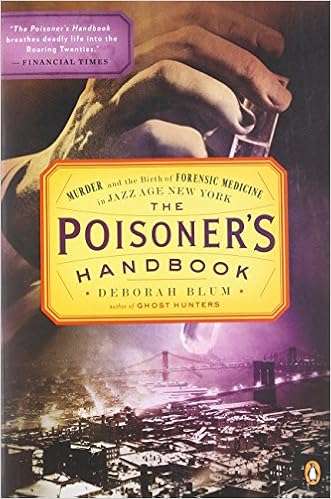
Deborah Blum, The Poisoner’s Handbook: Murder and the Birth of Forensic Medicine in Jazz Age New York (2010)
Engagingly written and cleverly crafted, it weaves together histories of the new science of toxicology, the first forensics department, and Progressive and Prohibition Era New York City. I can recommend it to anyone with an interest in the history of science and medicine, in social reform, or in the sordid details of other people’s love lives and get-rich-quick schemes. Did you know that the United States government poisoned industrial alcohols during Prohibition to discourage their reformulation into potable alcohol? And that many Americans were blinded or killed because they didn’t know or didn’t care? I have recommended this book to an ICU fellow, my bookworm of an aunt, and my nerdy youngest brother. I bet you would like it too.
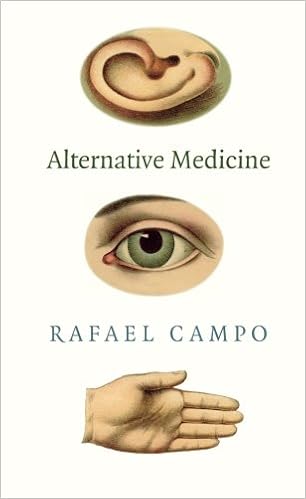
Rafael Campo, What the Body Told (1996) and Alternative Medicine (2014)
When Rafael Campo visited Pittsburgh for a reading, I knew he was a physician-poet at Harvard but was not familiar with his work. Afterwards I bought two of his books and fan-gushed all over him in the autograph line. This is what he wrote for me: “together in being ‘a little weird’” and “in the spirit of healing.” A fellow medical humanist, he lives the tension between medicine as an art and as a science. Medicine is better for it. He has a talent for capturing the pathos, contradictions, and moral failings encouraged by a medical system that frequently puts profits over people. Winner of a Lambda Literary Award for Gay Men’s Poetry, What the Body Told eloquently captures the helplessness of being both a gay man and a physician in the early HIV/AIDS epidemic. Alternative Medicine contains poems both about his family (father, partner, children) and his medical practice. Campo is particularly adept at structured verse, and I delighted at parsing the stanzas that adhered to some rule and yet yielded fluent lines. I want to re-read these so that when I lead a floor team I can have a related poem at hand when patient-care issues arise.

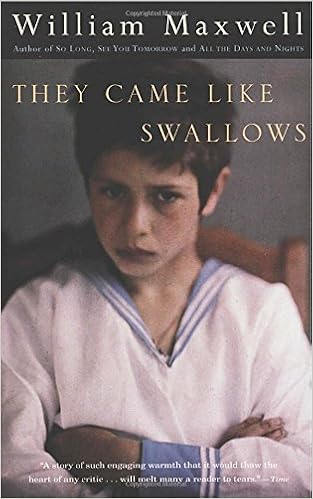
William Maxwell, They Came Like Swallows (1937)
I chose this little novel because it straddled the line between “work” and “pleasure,” being a fictionalized account of one Midwestern family’s encounter with the 1918 Influenza Pandemic. The title comes from a line of a William Butler Yeats poem: “They came like swallows and like swallows went,/ And yet a woman’s powerful character/ Could keep a swallow to its first intent.” Each of the three chapters is written from the perspective of one Morison boys/men: the younger son, the older son, and the husband/father. The woman of powerful character is Elizabeth Morison, whom the reader sees through the eyes of those who revere her. It bothered me that she did not get a chapter of her own, but maybe I shouldn’t have expected as much from 1937. Nevertheless, for what it is, it is an affecting account of boy- and manhood. I am trying to get the Pediatrics Book Club to read it in honor of the coming centenary.
T Cooper, Lipshitz (2006)
As I mentioned in a post when I started this book, I bought it to practice my German, only to discover it was a translation of something originally written in English. As a historian, I found the first 2/3 of the novel the most interesting, as we follow the Lipshitz family from rural Poland to New York City to small-town Texas. The key event is the disappearance of 5-year-old Ruben when they all land at Ellis Island. His mother, Esther, who was ambivalent about her maternal responsibilities, sublimates her grief and guilt into an obsession with Charles Lindbergh, whose birthday was one day off from Ruben’s and who grew up to recapitulate the loss of a son. The last 1/3 of the novel introduces the author as a character, great-grand-nephew of Ruben, who has assumed the identity of rapper Eminem. It turns out that T is transgender, which opens up all kinds of questions about assuming a new/true identity, as explored through realistic fiction.
Memoir 6 of 1: Childhood (2015)
This interesting book from Ponies+Horses Books is six short memoirs bound together with the common theme of “childhood.” They range from Andrew J. Fitt’s and Tracy Craig’s first-hand accounts of growing up with cerebral palsy and Tetralogy of Fallot congenital heart disease, respectively, to Hillary Savoie’s coming to grips with her medically fragile daughter having a very different childhood than the one of which she had dreamed while pregnant. The mixed quality of the writing reflects the authors’ variable backgrounds. I think I will recommend this book to the physicians who are putting together a curriculum for medical students and residents rotating through the new special-needs clinic.
Michael Sappol, Body Modern: Fritz Kahn, Scientific Illustration, and the Homuncular Subject (2017)
You know the famous picture of a human body designed to look like a factory? That was the brain child of Fritz Kahn, a German-Jewish ob-gyn who emigrated to the United States in the 1930s and popularized science and medicine. This book is all about the idea of the efficient modern body and helping people in the early 20th century understand themselves in an increasingly technologized world. Kahn was basically an enchanted mechanist who preserved the idea of an individual subject with agency despite a world (and a body) made up of machines. I waited for this book for many years and need to re-read it so I can better incorporate it into my own work on the history of bodies.
Alice Weinreb, Modern Hungers: Food and Power in Twentieth-Century Germany (2017)
This was another important book for my historical scholarship, on the place of hunger in modern Germany, whether that caused by the Allied blockade during WWI, the collapse of the Germany economy after WWII, or by dieting for fad or fitness later in the century. Weinreb does a good job teasing out some of the gendered implications, such as West German schools letting out at 1 o'clock so children could go home for lunch with their mothers. This schedule is still seen in German schools today and makes it difficult for some women to go back to work after having children. Meanwhile, East Germany tried to feed its schoolchildren cafeteria lunches, but its mothers--who by and large worked outside the home--rebelled, preferring to feed their children themselves on their lunch breaks.
Ian Miller, A Modern History of the Stomach: Gastric Illness, Medicine and British Society, 1800-1950 (2011)
Given its sweeping title, I expected more from what turned out to be a single-country case study of the evolution of the idea of "dyspepsia" and stomach ulcers. For all its narrow, internal focus, it's relatively well research and written, and Miller deserves some props for choosing examples that stretch out over a century and a half. I was surprised it wasn't (more) referenced at the conference I attended in Aberdeen on digestion in the long nineteenth century.
Manfred Berg & Geoffrey Cocks, editors, Medicine and Modernity: Public Health and Medical Care in Nineteenth- and Twentieth-Century Germany (1997)
This is a collection of essays, some of which I had read before, with which I wanted to refamiliarize myself. It covers everything from hospital food in the mid-1800s to psychiatry during/after WWI to the crisis of professionalization in the late-1900s, as (West) Germans came to grips with the fact that many former-Nazis had continued to enjoy successful careers with little in the way of consequences for their actions during the Third Reich.
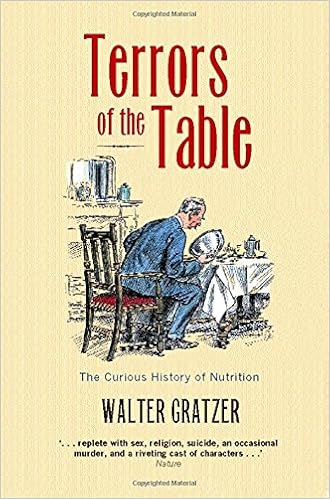
I have already blogged about how much I liked Diana Wylie's Starving on a Full Stomach: Hunger and the Triumph of Cultural Racism in Modern South Africa (2001) and how much I disliked Yuriko Akiyama's Feeding the Nation: Nutrition and Health in Britain before World War One (2010). I just couldn't make myself finish Walter Gratzer's Terrors of the Table: A Curious History of Nutrition (2005), which reads like nothing so much as a diletantish retirement project, in which Gratzer researched a variety of anecdotes and then compiled them one after the other. If there's any argument to the book at all--I made it four chapters and 70 pages in--it is a Whiggish one of Progress.
For Pediatric Book Club I listened to Swing Time (2016) by Zadie Smith while commuting, and I read Exit West (2017) by Mohsin Hamid while exercising. I'm supposed to be picking up Autumn (2017), by Ali Smith next.
I can't remember if I finished these books in 2016 or 2017, but the pile also included
Next on the docket:
Deborah Blum, The Poisoner’s Handbook: Murder and the Birth of Forensic Medicine in Jazz Age New York (2010)Engagingly written and cleverly crafted, it weaves together histories of the new science of toxicology, the first forensics department, and Progressive and Prohibition Era New York City. I can recommend it to anyone with an interest in the history of science and medicine, in social reform, or in the sordid details of other people’s love lives and get-rich-quick schemes. Did you know that the United States government poisoned industrial alcohols during Prohibition to discourage their reformulation into potable alcohol? And that many Americans were blinded or killed because they didn’t know or didn’t care? I have recommended this book to an ICU fellow, my bookworm of an aunt, and my nerdy youngest brother. I bet you would like it too.
Rafael Campo, What the Body Told (1996) and Alternative Medicine (2014)
When Rafael Campo visited Pittsburgh for a reading, I knew he was a physician-poet at Harvard but was not familiar with his work. Afterwards I bought two of his books and fan-gushed all over him in the autograph line. This is what he wrote for me: “together in being ‘a little weird’” and “in the spirit of healing.” A fellow medical humanist, he lives the tension between medicine as an art and as a science. Medicine is better for it. He has a talent for capturing the pathos, contradictions, and moral failings encouraged by a medical system that frequently puts profits over people. Winner of a Lambda Literary Award for Gay Men’s Poetry, What the Body Told eloquently captures the helplessness of being both a gay man and a physician in the early HIV/AIDS epidemic. Alternative Medicine contains poems both about his family (father, partner, children) and his medical practice. Campo is particularly adept at structured verse, and I delighted at parsing the stanzas that adhered to some rule and yet yielded fluent lines. I want to re-read these so that when I lead a floor team I can have a related poem at hand when patient-care issues arise.
William Maxwell, They Came Like Swallows (1937)
I chose this little novel because it straddled the line between “work” and “pleasure,” being a fictionalized account of one Midwestern family’s encounter with the 1918 Influenza Pandemic. The title comes from a line of a William Butler Yeats poem: “They came like swallows and like swallows went,/ And yet a woman’s powerful character/ Could keep a swallow to its first intent.” Each of the three chapters is written from the perspective of one Morison boys/men: the younger son, the older son, and the husband/father. The woman of powerful character is Elizabeth Morison, whom the reader sees through the eyes of those who revere her. It bothered me that she did not get a chapter of her own, but maybe I shouldn’t have expected as much from 1937. Nevertheless, for what it is, it is an affecting account of boy- and manhood. I am trying to get the Pediatrics Book Club to read it in honor of the coming centenary.
T Cooper, Lipshitz (2006)
Memoir 6 of 1: Childhood (2015)
This interesting book from Ponies+Horses Books is six short memoirs bound together with the common theme of “childhood.” They range from Andrew J. Fitt’s and Tracy Craig’s first-hand accounts of growing up with cerebral palsy and Tetralogy of Fallot congenital heart disease, respectively, to Hillary Savoie’s coming to grips with her medically fragile daughter having a very different childhood than the one of which she had dreamed while pregnant. The mixed quality of the writing reflects the authors’ variable backgrounds. I think I will recommend this book to the physicians who are putting together a curriculum for medical students and residents rotating through the new special-needs clinic.
Michael Sappol, Body Modern: Fritz Kahn, Scientific Illustration, and the Homuncular Subject (2017)
You know the famous picture of a human body designed to look like a factory? That was the brain child of Fritz Kahn, a German-Jewish ob-gyn who emigrated to the United States in the 1930s and popularized science and medicine. This book is all about the idea of the efficient modern body and helping people in the early 20th century understand themselves in an increasingly technologized world. Kahn was basically an enchanted mechanist who preserved the idea of an individual subject with agency despite a world (and a body) made up of machines. I waited for this book for many years and need to re-read it so I can better incorporate it into my own work on the history of bodies.
Alice Weinreb, Modern Hungers: Food and Power in Twentieth-Century Germany (2017)
Ian Miller, A Modern History of the Stomach: Gastric Illness, Medicine and British Society, 1800-1950 (2011)
Given its sweeping title, I expected more from what turned out to be a single-country case study of the evolution of the idea of "dyspepsia" and stomach ulcers. For all its narrow, internal focus, it's relatively well research and written, and Miller deserves some props for choosing examples that stretch out over a century and a half. I was surprised it wasn't (more) referenced at the conference I attended in Aberdeen on digestion in the long nineteenth century.
Manfred Berg & Geoffrey Cocks, editors, Medicine and Modernity: Public Health and Medical Care in Nineteenth- and Twentieth-Century Germany (1997)
This is a collection of essays, some of which I had read before, with which I wanted to refamiliarize myself. It covers everything from hospital food in the mid-1800s to psychiatry during/after WWI to the crisis of professionalization in the late-1900s, as (West) Germans came to grips with the fact that many former-Nazis had continued to enjoy successful careers with little in the way of consequences for their actions during the Third Reich.
I have already blogged about how much I liked Diana Wylie's Starving on a Full Stomach: Hunger and the Triumph of Cultural Racism in Modern South Africa (2001) and how much I disliked Yuriko Akiyama's Feeding the Nation: Nutrition and Health in Britain before World War One (2010). I just couldn't make myself finish Walter Gratzer's Terrors of the Table: A Curious History of Nutrition (2005), which reads like nothing so much as a diletantish retirement project, in which Gratzer researched a variety of anecdotes and then compiled them one after the other. If there's any argument to the book at all--I made it four chapters and 70 pages in--it is a Whiggish one of Progress.
For Pediatric Book Club I listened to Swing Time (2016) by Zadie Smith while commuting, and I read Exit West (2017) by Mohsin Hamid while exercising. I'm supposed to be picking up Autumn (2017), by Ali Smith next.
I can't remember if I finished these books in 2016 or 2017, but the pile also included
- The Princess Bride: S. Morgenstern's Classic Tale of True Love & High Adventure (1973), by William Goldman. I can't believe I have been a TPB fan as long as I have been and didn't realize that the movie was based on a book. As soon as I did realize it, I purchased the book and Cary Elwes' memoir for Dear Husband for Christmas 2016, and we read them together. The exercise reminded me how different the genres of print and film are, and at first I balked that the characters on the pages were not the beloved ones I knew from the silver screen. But by the end I appreciated the character development captured in the book that had to be cut in the movie.
- Cary Elwes, As You Wish: Inconceivable Tales from the Making of The Princess Bride (2014). High-brow literature this is not, but I did appreciate the behind-the-scenes view. Favorite part: dissolving into laughter with DH about the time the film crew bust a gut with Andre the Giant over his noxious farts.
- One Shot at Forever: A Small Town, An Unlikely Coach, and A Magical Baseball Season (2012), Chris Ballard's engagingly written recreation of the Macon High School baseball team's made-for-tv-movie run at the state championship in 1971 that was a farewell gift from AS.
- Charles Dickens, A Christmas Carol (1843). Does it count if Dear Husband did most of the reading, and I fell asleep listening? He also tried some Nathaniel Hawthorne, which I found more interesting than I thought I would, and some Edgar Allan Poe, which I found less interesting.
- Eric Topol, The Creative Destruction of Medicine: How the Digital Revolution Will Create Better Health Care (2012), which Dear Husband bought for me and I appreciated more after it was mentioned at a Grand Rounds talk.
Next on the docket:
- Cristin O’Keefe Aptowicz, Dr. Mütter’s Marvels: A True Tale of Intrigue and Innovation at the Dawn of Modern Medicine (2014), a Christmas present from the nerdy youngest brother about the founder of the (in)famous museum in Philadelphia.
- Henny Beaumont, Hole in the Heart: Bringing up Beth (2016), a graphic novel about the author's daughter, who has Down Syndrome.
- Caleb Carr, The Alienist (1994), which failed to make it to the big screen has now been made into a television series.
What was your favorite book from 2017? What are you reading in 2018?
Thursday, January 4, 2018
What Residency Looks Like XII: A Little Light Reading
Older
Tuesday, January 2, 2018
Rememberlutions 2017
Since January 2015, I have kept a decorated glass jar on a shelf as a place to store reminders of things I want to remember about the previous year. You can find my posts about 2015 and 2016 by clicking. Because these early years of medical training tend to involve a lot of doubt and self-recrimination--as well as long working that seem to preclude having time for fun and relationships--I like the idea of pausing to look back at my accomplishments and positive experiences. This blog post is mostly a personal exercise in gratitude, but I share it with you in case you are curious about what went on with me over the last year. I don't expect you to read all of it, but maybe leave a comment at the end with one of your favorite memories of 2017.To be honest, my favorite memories from 2017 are every time I hugged a crying mother, or when a patient, family member, or attending thanked me for being a good doctor. There was the catastrophizing teenager who assured me I had calmed his fears about his prognosis. Multiple children of old and sick patients in the hospital expressed appreciation for how I conducted family meetings, answered their questions, and grieved with them. And my heart just melted at the way the mother of a newborn with Neonatal Abstinence Syndrome called me "Dr. Kristen." I hope most of these memories were left out of the jar more out of concern for my patients' privacy than because of exhaustion. I did collect encouraging feedback from my superiors to come back to when something goes wrong, or I (inevitably) fail at some task:
"Thanks for all your great work on neurology. You have great attention to detail even working overnight as a guardian angel of neurology. Hope you will get some good rest after your overnight."
"You have good clinical judgement." (From none other than the guy who literally wrote the textbook on pediatric clinical diagnosis.)
"Special thank you to you for always going the distance: your willingness to step up in a lot of ways from this project [on reducing burnout] to your [history of medicine] noon conference and the stuff from this morning [sitting up front at Chairman's Rounds after an overnight shift in the pediatric emergency room] is inspiring!"
"I just wanted to let you know that you did a great job this week. The patient that you saw today was very complex from the ID standpoint and you did an exceptional job of collecting all of the information and putting it together in a coherent fashion with an excellent plan. I usually try to come up with some critical feedback but you really did an exceptional job and I can't think of anything specific for you to work on."

In other news, I was made a Yelp! Expert and have had two of my reviews featured as Reviews of the Day. My Yelp! account is another repository of memories from the past year, from the sketchy froyo place in Shadyside (Happy Berry) to our marvelous 12th anniversary dinner (Altius).
Now on to the Rememberlutions jar. It is not big enough for all my good memories: there was a whole stack of programs in addition to the tickets and scraps of paper stuffed inside. Here they are, in approximate chronological order:
We started the year by using our new Carnegie Museum membership to visit the Art Museum to see Brazilian artist Helio Oiticica's work.
Then there was a Duquesne University studio production of local faculty musicians performing late-19th-century French, Weimar-era German, and mid-20th-century American cabaret pieces called "The Art of Cabaret."
Probably my favorite musical performance of the year was the organ and vocal concert "Choral Fantasy" at East Liberty Presbyterian Church in January 2017. The melancholy sounds of the singers' voices drifting down to us from the balcony still haunt me.
Watching Hidden Figures with a group of Black women leaders in Pittsburgh.
![]() |
| Any year that includes Dale Chihuly glass is a good year. (Columbus, OH) Other criteria: good food, fun games, beautiful music, friends and family. |
The Pittsburgh Opera's Pennsylvania premiere of As One, a two-person operetta about a transgender woman's coming to terms with herself, had some of the best music for string quartet I have ever heard.
A "Welcome to worship card" from Third Presbyterian Church with the verse, "Jesus spoke to them saying, 'I am the Light of the world. Whoever follows me will never walk in darkness but will have the light of life.' John 8:12"
Beauty and the Beast, which was beautiful to watch but involved so much CGI that it wasn't really an improvement over the original cartoon version
![]() |
| Nefarious, another of our favorite new games this year. |
Pilobolus' Shadow Land at the Byham Theater, a review of which I combined with some of my own nocturnal dreams at the same time: What Dreams May Come.
A worship concert, "The World Beloved," at First United Methodist Church, one of our three faith communities.

This hand-written note from the Chair of the Pediatrics Department that came with a gift card to Millie's Ice Cream: "Have a couple of scoops on us. I am so grateful for your hard work and caring ways! Best, Terry" (Everyone got one, but still.)
At some point I went back to the Bricolage for WordPlay and played a game of bingo that involved finding someone who had never attended one of these shows and someone who had hands larger than mine. If I can, I like to attend on Friday nights, because the American Sign Language interpreter is really good.
Visiting the Museum of Fine Arts in Boston with friend FN while there for a conference in April.
I completed two jigsaw puzzles this year, one of a Bengal Tiger by myself (click for photo and short story), and one of the constellations and zodiac with my family over Christmas.
Treasured memories from our trip to Copenhagen and Scotland at the end of May so I could give a conference paper include walking on the beach in Aberdeen and touring the grounds of Balmoral Castle, Scottish Home to The Royal Family. Most interesting tidbit: watching Queen Elizabeth age from a perfectly ordinary-looking young wife and mother in their early photo Christmas cards to the wizened, white-haired old lady as I have always known her. We had actually attended church with her that morning(!). Also riding the funicular part of the way up Cairngorm Mountain and then hiking to the summit.
I gave the first Pediatrics noon conference for the new interns, a history of medicine talk about using food as medicine.
Staying up late on a work night to watch Moonlight with our "friends": someone shared to a list-serv I'm on that there would be a viewing of the film at a local theater, so we showed up, only to discover that it wasn't a public event at all: the owner of the theater had invited people he knew to his "home" to see the movie projected on a large screen over the stage.
Celebrating my birthday with dugout seats from one of my residency programs that were close enough for the Pirates Parrot to wiggle his butt in our faces.
Of all the game nights with L & R, apparently my favorite was the time we played the ever-expanding game of Concept. Second favorite: Carcassonne. Third: Starfarers of Catan.
The Pittsburgh revival of In the Heights, the Tony-Winning Best Musical by Lin-Manuel Miranda advertised with his picture (but a different lead actor in the show). Heart-felt but not particularly memorable for me.
Laughing our butts off from the cheap seats at An Act of God, an irreverent religious comedy written by a former Daily Show writer for a local comedian. Unfortunately, the home-town crowd appeared to have found ticket prices too high, and they ended up closing the month-long run 3 days early, before we could recommend it to anyone else.
Attending "On Green Dolphin Street," the September 2017 Jazz at Emmanuel vespers service

A note from friend JR, who hand-made my new Halloween earrings in the shapes of candy corns, spiders, and pumpkins: "Dearest Kristen, I hope that this week is going better for you. I also hope that you enjoy the earrings. I love and miss you and am always here if you need me." (I went as a Smarty Pants for Halloween; those are Smarties stuck to my pants with double-sided tape.)
The Carnegie Museum of Natural History's Power of Poison in the Natural World exhibition. I should get around to writing that blog post... Did you know the Mr. Yuck sticker was invented at the Children's Hospital here?
Then there's the program from the jazz concert by our neighbor at a suburban Presbyterian Church containing the following written conversation: Me: "We need spinach for Cajun chicken." DH: "We also need to cook rice." I guess that's what we had for dinner, which reminds me, I should post the recipe sometime, as it's one of our favorites.
Watching Murder on the Orient Express over Thanksgiving.
A ticket the Pittsburgh Symphony Orchestra's superfluous and mildly offensive mini-operetta staging of Haydn's Creation. The music by itself was worth it, however.

Probably my favorite theater experience was Dodo, an "immersive" theater experience put on by The Bricolage in the Carnegie Museums of Art and Natural History after hours that began as a surrealist comedy and became a meditation on memory, loss, and preservation.
From the jar I also retrieved a ticket to see Rogue One at Christmas 2016 (we later re-watched it with FUMC friends over dinner) and our stubs from a community theater production of The Music Man back in November 2016. Big events from 2017 that didn't make it into the jar included a c-c-c-cold visit to Fallingwater and a warmer one to Columbus; hearing the Junior Mendelssohn Choir sing and also the Bach Choir's War concert; going to Kennywood amusement park and tubing down a crick with my pediatrics colleagues; planting trees with the Pittsburgh Redbud Project and wandering Main Street in little Cambridge, Ohio, all decked out like a Charles Dicken's novel (blog post coming!).
Happy New Year, Reader. What are you going to remember about 2017?
Labels:
Aberdeen,
art,
church,
conference,
Copenhagen,
food,
friends,
games,
garden,
holiday,
internship,
Kultur,
memory,
museum,
music,
residency,
Scotland,
theater
Friday, December 29, 2017
That's So Pittsburgh: the Maxo Vanka murals
After Christmas, friend JHR invited me to a docent-led tour of the Maxo Vanka murals at St. Nicholas Church in Millvale. The first of two Croatian Catholic Churches in Pittsburgh suffered a fire in 1927. After being rebuilt, the walls were painted white. Then a new priest knew someone who knew a Croatian artist who had fled pre-WWII Europe to New York City with his American wife and daughter. Vanka (1889-1963) came to Millvale for 8 weeks in 1937 to paint murals on the walls just in time for the 10-year re-dedication of the church. He came back in 1943 for a few more months to paint more. In 1951 he returned to paint symbols on the choir loft.Behind the altar, Vanka painted a Croatian-inflected Byzantine Madonna and Child with Croatian immigrants at their feet. Around the walls, he contrasted images of Croatian mothers mourning sons killed during World War I with immigrant mothers mourning sons who died in industrial accidents. He also depicted the Evangelists with a silver-leaf background that used to be behind Mary and Jesus, before a re-paint in the 1970s. I'm not such a fan of the silver, but apparently the mural preservation society hopes to restore the original look. Over the last several years, seven conservation artists (all women) have painstakingly cleaned and brightened many of the murals. They have also rigged up a fancy LED lighting system.
Some of the images Vanka created in 1937 and especially in 1941 are pretty avant garde, but the weirder ones he put towards the back of the sanctuary or on the ceiling.
Above the large creche you can see the fairly conventional crucifixion scene. (Lighting was hard.)
Here you can see the paintings being highlighted around the stained-glass windows. That's Injustice there on the right, wearing a gas mask and one blood-red glove, bearing a bloody sword and uneven scales. Below on the right is the angel of Justice, wearing white and holding up even scales. I rather liked her.
Above on the left is the Pieta, with Mary holding Jesus' body off the cross. You can see that the church was still decorated beautifully for Christmas with white lights and red and white poinsettias.
Here's one more for you, a sickly green Jesus being crucified on a twentieth-century battlefield. It's the kind of thing that was getting artists purged over in Europe, but here Vanka was safe to make his critique of war and class warfare. My photography is obviously amateur; it's much better to see the murals in person.
Editor's Note: You might also like my posts about an eating tour of the Strip District or St. Paul Cathedral's summer organ series.
Sunday, December 24, 2017
Eating our way through the 2017 winter holidays
This Christmas has been marked by delicious but under-documented meals. Here are some guest-pleasing recipes from my kitchen to yours. The first and last come from my oldest cookbook, a handwritten compilation of recipes from my college suities. My New Year's Resolution is to cook from more of the recipes I own in a variety of books and on note cards collected at my bridal shower. Of course you can find all the delicious details right here.
Stuffed Chicken Breasts
Ingredients:
boneless, skinless chicken breasts
prosciutto
fresh basil leaves
grated mozzarella cheese
1/2 cup chicken bouillon
2 tbsp prepared mustard
minced garlic to taste
cooking oil
toothpicks
1. Assemble the ingredients. Heat the oven to 350 and some oil in the pan.
2. Cut the chicken breasts into thirds. I slice off the long "flap" on the side and then cut the remaining half-heart crosswise. Try to get lumps of meat that are roughly the same volume, if different shapes. Score the long pieces lengthwise to make them more flexible and cut a pocket into the thicker chunks.
3. Stuff with a layer of prosciutto, then 1-2 basil leaves, then a generous pinch of mozzarella. Roll up the long pieces or pinch closed the pockets and secure with 2-3 toothpicks. It's okay if a little of the stuffing leaks out, but try to protect the insides as much as possible.
4. As you complete each ball-o'-chicken goodness, place in frying pan to brown on as many sides as possible. Rotate them in between securing the other pieces. When each is sufficiently browned, transfer to the baking pan.
5. Once all balls have been browned, pop them in the oven to cook a further 20 minutes. Meanwhile, add bouillon to the frying pan and scrape up all the caramelized bits. Add mustard, garlic to taste, and any remaining basil leaves or prosciutto, cut into strips. Let cook down ~5 minutes.
6. Serve with noodles, a veg, and a warning about the toothpicks to your guests!
For dessert you can offer a fruit salad and/or (almost) vegan brownies.

Fruit Salad with Cranberry Sauce
Ingredients:
pineapple + any fruit you might have on hand
I used 1 pear and 1 apple, while the recipe suggested oranges and kiwis. Banana would also work.
1 pomegranate
bib lettuce
2 cups raw cranberries
1/3 cup water
1/2? cup juice (the recipe recommended orange, but grape is what we had)
<1 cup="" p="" sugar="">
1. Pull up something to watch on your laptop, such as a Star Wars movie, or a M*A*S*H marathon.
2. Line the serving container(s) with lettuce leaves.
3. Chop the fruit. I did not find cutting up my first pineapple as difficult as I thought it would be.
4. Retrieve the seeds from inside the pomegranate. I did find this task about as difficult as I thought it would be. Start by scoring the outside of the fruit on its six ridges. Next work your fingers into the grooves and tear the fruit open. Fill a large bowl halfway with water. Pick out the seeds while holding the segments under water. The seeds are supposed to sink and the pulpy parts float. Then skim the surface for the detritus, pour out the water, et voila, pomegranate seeds! Sprinkle on top of the fruit.
5. Boil the cranberries and water for ~5 minutes, or until the berries start to pop. Take them off the heat and mix in the juice and sugar. Let cool. Then push through a strainer, making sure to mash all the berries. You can save the skins for toast or pork chops, but the sauce you should cool in the fridge about 2 hours.
6. Dress the salad just before serving, otherwise the sauce will stain the fruit red (as demonstrated above).
(Almost) Vegan Brownies
Ingredients:
1 cup unsweetened applesauce
1 cup white sugar
1 tsp vanilla
3/4 cup flour
1/3 cup cocoa powder
2 tsp baking powder
1/2 tsp baking soda
1/2 tsp salt
1/2 cup (vegan) chocolate chips
toothpick
1. Heat oven to 350. Grease a 9"x9" baking pan. If you are baking for a vegan, use something other than butter, otherwise they are (almost) vegan.
2. Mix first 3 ingredients in one bowl and the rest in another. Fold wet into dry, then add the chips. Pour into pan. Place into oven for 20-25 minutes. You know it's done when a toothpick inserted into the middle comes out mostly clean. I would rather err on the slightly undercooked side for the gooeyness.
3. Cool before slicing. Despite having no eggs, these make a really "cake-y" brownie. By the time I wrote this blog post, there were no survivors for photographic purposes.1>
Stuffed Chicken BreastsIngredients:
boneless, skinless chicken breasts
prosciutto
fresh basil leaves
grated mozzarella cheese
1/2 cup chicken bouillon
2 tbsp prepared mustard
minced garlic to taste
cooking oil
toothpicks
1. Assemble the ingredients. Heat the oven to 350 and some oil in the pan.
2. Cut the chicken breasts into thirds. I slice off the long "flap" on the side and then cut the remaining half-heart crosswise. Try to get lumps of meat that are roughly the same volume, if different shapes. Score the long pieces lengthwise to make them more flexible and cut a pocket into the thicker chunks.
3. Stuff with a layer of prosciutto, then 1-2 basil leaves, then a generous pinch of mozzarella. Roll up the long pieces or pinch closed the pockets and secure with 2-3 toothpicks. It's okay if a little of the stuffing leaks out, but try to protect the insides as much as possible.
4. As you complete each ball-o'-chicken goodness, place in frying pan to brown on as many sides as possible. Rotate them in between securing the other pieces. When each is sufficiently browned, transfer to the baking pan.
5. Once all balls have been browned, pop them in the oven to cook a further 20 minutes. Meanwhile, add bouillon to the frying pan and scrape up all the caramelized bits. Add mustard, garlic to taste, and any remaining basil leaves or prosciutto, cut into strips. Let cook down ~5 minutes.
6. Serve with noodles, a veg, and a warning about the toothpicks to your guests!
For dessert you can offer a fruit salad and/or (almost) vegan brownies.

Fruit Salad with Cranberry Sauce
Ingredients:
pineapple + any fruit you might have on hand
I used 1 pear and 1 apple, while the recipe suggested oranges and kiwis. Banana would also work.
1 pomegranate
bib lettuce
2 cups raw cranberries
1/3 cup water
1/2? cup juice (the recipe recommended orange, but grape is what we had)
<1 cup="" p="" sugar="">
1. Pull up something to watch on your laptop, such as a Star Wars movie, or a M*A*S*H marathon.
2. Line the serving container(s) with lettuce leaves.
3. Chop the fruit. I did not find cutting up my first pineapple as difficult as I thought it would be.
4. Retrieve the seeds from inside the pomegranate. I did find this task about as difficult as I thought it would be. Start by scoring the outside of the fruit on its six ridges. Next work your fingers into the grooves and tear the fruit open. Fill a large bowl halfway with water. Pick out the seeds while holding the segments under water. The seeds are supposed to sink and the pulpy parts float. Then skim the surface for the detritus, pour out the water, et voila, pomegranate seeds! Sprinkle on top of the fruit.
5. Boil the cranberries and water for ~5 minutes, or until the berries start to pop. Take them off the heat and mix in the juice and sugar. Let cool. Then push through a strainer, making sure to mash all the berries. You can save the skins for toast or pork chops, but the sauce you should cool in the fridge about 2 hours.
6. Dress the salad just before serving, otherwise the sauce will stain the fruit red (as demonstrated above).
(Almost) Vegan Brownies
Ingredients:
1 cup unsweetened applesauce
1 cup white sugar
1 tsp vanilla
3/4 cup flour
1/3 cup cocoa powder
2 tsp baking powder
1/2 tsp baking soda
1/2 tsp salt
1/2 cup (vegan) chocolate chips
toothpick
1. Heat oven to 350. Grease a 9"x9" baking pan. If you are baking for a vegan, use something other than butter, otherwise they are (almost) vegan.
2. Mix first 3 ingredients in one bowl and the rest in another. Fold wet into dry, then add the chips. Pour into pan. Place into oven for 20-25 minutes. You know it's done when a toothpick inserted into the middle comes out mostly clean. I would rather err on the slightly undercooked side for the gooeyness.
3. Cool before slicing. Despite having no eggs, these make a really "cake-y" brownie. By the time I wrote this blog post, there were no survivors for photographic purposes.1>
Labels:
Christmas,
Fest,
food,
friends,
holiday,
recipe,
vegan,
vegetarian,
Weihnachten
Subscribe to:
Posts (Atom)