Showing posts with label Scotland. Show all posts

Tuesday, January 2, 2018

Rememberlutions 2017

Since January 2015, I have kept a decorated glass jar on a shelf as a place to store reminders of things I want to remember about the previous year. You can find my posts about 2015 and 2016 by clicking. Because these early years of medical training tend to involve a lot of doubt and self-recrimination--as well as long working that seem to preclude having time for fun and relationships--I like the idea of pausing to look back at my accomplishments and positive experiences. This blog post is mostly a personal exercise in gratitude, but I share it with you in case you are curious about what went on with me over the last year. I don't expect you to read all of it, but maybe leave a comment at the end with one of your favorite memories of 2017.

To be honest, my favorite memories from 2017 are every time I hugged a crying mother, or when a patient, family member, or attending thanked me for being a good doctor. There was the catastrophizing teenager who assured me I had calmed his fears about his prognosis. Multiple children of old and sick patients in the hospital expressed appreciation for how I conducted family meetings, answered their questions, and grieved with them. And my heart just melted at the way the mother of a newborn with Neonatal Abstinence Syndrome called me "Dr. Kristen." I hope most of these memories were left out of the jar more out of concern for my patients' privacy than because of exhaustion. I did collect encouraging feedback from my superiors to come back to when something goes wrong, or I (inevitably) fail at some task:

"Thanks for all your great work on neurology. You have great attention to detail even working overnight as a guardian angel of neurology. Hope you will get some good rest after your overnight."

"You have good clinical judgement." (From none other than the guy who literally wrote the textbook on pediatric clinical diagnosis.)

"Special thank you to you for always going the distance: your willingness to step up in a lot of ways from this project [on reducing burnout] to your [history of medicine] noon conference and the stuff from this morning [sitting up front at Chairman's Rounds after an overnight shift in the pediatric emergency room] is inspiring!"

"I just wanted to let you know that you did a great job this week. The patient that you saw today was very complex from the ID standpoint and you did an exceptional job of collecting all of the information and putting it together in a coherent fashion with an excellent plan. I usually try to come up with some critical feedback but you really did an exceptional job and I can't think of anything specific for you to work on."


In other news, I was made a Yelp! Expert and have had two of my reviews featured as Reviews of the Day. My Yelp! account is another repository of memories from the past year, from the sketchy froyo place in Shadyside (Happy Berry) to our marvelous 12th anniversary dinner (Altius).

Now on to the Rememberlutions jar. It is not big enough for all my good memories: there was a whole stack of programs in addition to the tickets and scraps of paper stuffed inside. Here they are, in approximate chronological order:

We started the year by using our new Carnegie Museum membership to visit the Art Museum to see Brazilian artist Helio Oiticica's work.

Then there was a Duquesne University studio production of local faculty musicians performing late-19th-century French, Weimar-era German, and mid-20th-century American cabaret pieces called "The Art of Cabaret."

Probably my favorite musical performance of the year was the organ and vocal concert "Choral Fantasy" at East Liberty Presbyterian Church in January 2017. The melancholy sounds of the singers' voices drifting down to us from the balcony still haunt me.

Watching Hidden Figures with a group of Black women leaders in Pittsburgh.

Any year that includes Dale Chihuly glass is a good year. (Columbus, OH)
Other criteria: good food, fun games, beautiful music, friends and family.
While playing a pre-show ice-breaker game before a WordPlay performance at the Bricolage Theater (like The Moth, but with a live-DJed soundtrack), Dear Husband and I (Delilah) met Mary (Sampson), who invited us to attend the 19th annual Summit Against Racism at the Pittsburgh Theological Seminary, which she was organizing over MLK weekend. I later went back to the Seminary to watch "Unfinished Business: From the Great Migration to Black Lives Matter," a documentary about Pittsburgh's Black community.

The Pittsburgh Opera's Pennsylvania premiere of As One, a two-person operetta about a transgender woman's coming to terms with herself, had some of the best music for string quartet I have ever heard.

A "Welcome to worship card" from Third Presbyterian Church with the verse, "Jesus spoke to them saying, 'I am the Light of the world. Whoever follows me will never walk in darkness but will have the light of life.' John 8:12"

Beauty and the Beast, which was beautiful to watch but involved so much CGI that it wasn't really an improvement over the original cartoon version

Nefarious, another of our favorite new games this year.
Woody's Order, a one-woman show about the play-write and actor's older brother, Woody, who was born with cerebral palsy and "ordered" a sister from his parents. At the Pittsburgh Playhouse.

Pilobolus' Shadow Land at the Byham Theater, a review of which I combined with some of my own nocturnal dreams at the same time: What Dreams May Come.

A worship concert, "The World Beloved," at First United Methodist Church, one of our three faith communities.


This hand-written note from the Chair of the Pediatrics Department that came with a gift card to Millie's Ice Cream: "Have a couple of scoops on us. I am so grateful for your hard work and caring ways! Best, Terry" (Everyone got one, but still.)

At some point I went back to the Bricolage for WordPlay and played a game of bingo that involved finding someone who had never attended one of these shows and someone who had hands larger than mine. If I can, I like to attend on Friday nights, because the American Sign Language interpreter is really good.

Visiting the Museum of Fine Arts in Boston with friend FN while there for a conference in April.

I completed two jigsaw puzzles this year, one of a Bengal Tiger by myself (click for photo and short story), and one of the constellations and zodiac with my family over Christmas.

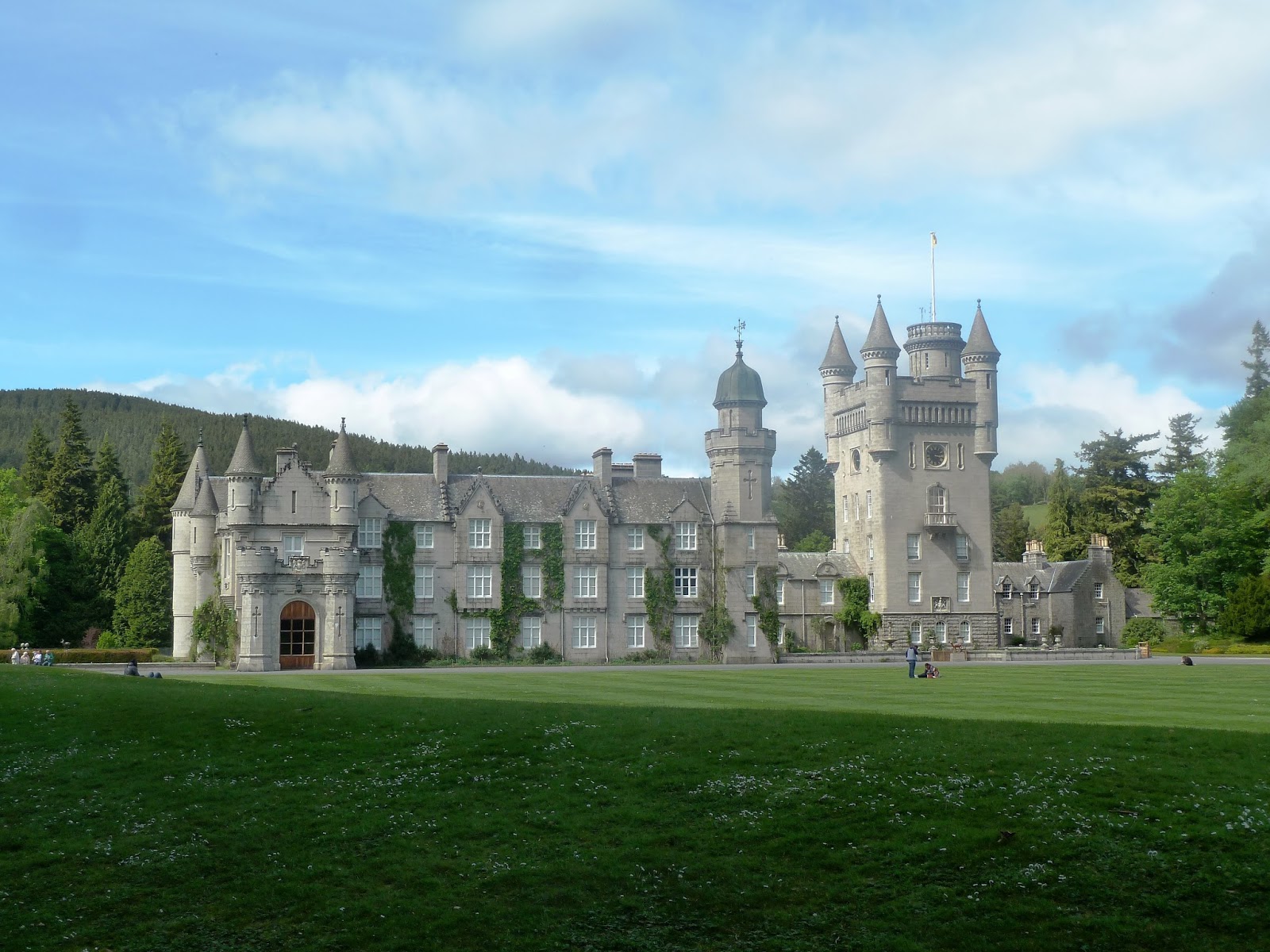
Treasured memories from our trip to Copenhagen and Scotland at the end of May so I could give a conference paper include walking on the beach in Aberdeen and touring the grounds of Balmoral Castle, Scottish Home to The Royal Family. Most interesting tidbit: watching Queen Elizabeth age from a perfectly ordinary-looking young wife and mother in their early photo Christmas cards to the wizened, white-haired old lady as I have always known her. We had actually attended church with her that morning(!). Also riding the funicular part of the way up Cairngorm Mountain and then hiking to the summit.

I gave the first Pediatrics noon conference for the new interns, a history of medicine talk about using food as medicine.

Staying up late on a work night to watch Moonlight with our "friends": someone shared to a list-serv I'm on that there would be a viewing of the film at a local theater, so we showed up, only to discover that it wasn't a public event at all: the owner of the theater had invited people he knew to his "home" to see the movie projected on a large screen over the stage.

Celebrating my birthday with dugout seats from one of my residency programs that were close enough for the Pirates Parrot to wiggle his butt in our faces.

Of all the game nights with L & R, apparently my favorite was the time we played the ever-expanding game of Concept. Second favorite: Carcassonne. Third: Starfarers of Catan.

The Pittsburgh revival of In the Heights, the Tony-Winning Best Musical by Lin-Manuel Miranda advertised with his picture (but a different lead actor in the show). Heart-felt but not particularly memorable for me.

Laughing our butts off from the cheap seats at An Act of God, an irreverent religious comedy written by a former Daily Show writer for a local comedian. Unfortunately, the home-town crowd appeared to have found ticket prices too high, and they ended up closing the month-long run 3 days early, before we could recommend it to anyone else.

Attending "On Green Dolphin Street," the September 2017 Jazz at Emmanuel vespers service


A note from friend JR, who hand-made my new Halloween earrings in the shapes of candy corns, spiders, and pumpkins: "Dearest Kristen, I hope that this week is going better for you. I also hope that you enjoy the earrings. I love and miss you and am always here if you need me." (I went as a Smarty Pants for Halloween; those are Smarties stuck to my pants with double-sided tape.)

The Carnegie Museum of Natural History's Power of Poison in the Natural World exhibition. I should get around to writing that blog post... Did you know the Mr. Yuck sticker was invented at the Children's Hospital here?

Then there's the program from the jazz concert by our neighbor at a suburban Presbyterian Church containing the following written conversation: Me: "We need spinach for Cajun chicken." DH: "We also need to cook rice." I guess that's what we had for dinner, which reminds me, I should post the recipe sometime, as it's one of our favorites.

Watching Murder on the Orient Express over Thanksgiving.

A ticket the Pittsburgh Symphony Orchestra's superfluous and mildly offensive mini-operetta staging of Haydn's Creation. The music by itself was worth it, however.

Probably my favorite theater experience was Dodo, an "immersive" theater experience put on by The Bricolage in the Carnegie Museums of Art and Natural History after hours that began as a surrealist comedy and became a meditation on memory, loss, and preservation.

From the jar I also retrieved a ticket to see Rogue One at Christmas 2016 (we later re-watched it with FUMC friends over dinner) and our stubs from a community theater production of The Music Man back in November 2016. Big events from 2017 that didn't make it into the jar included a c-c-c-cold visit to Fallingwater and a warmer one to Columbus; hearing the Junior Mendelssohn Choir sing and also the Bach Choir's War concert; going to Kennywood amusement park and tubing down a crick with my pediatrics colleagues; planting trees with the Pittsburgh Redbud Project and wandering Main Street in little Cambridge, Ohio, all decked out like a Charles Dicken's novel (blog post coming!).

Happy New Year, Reader. What are you going to remember about 2017?

Friday, June 2, 2017

Scotland: Highland Folk Museum


Our next AirBnB was down in Newtonmore, so after spending the middle of the day on Cairn Gorm Mountain, we stopped at the open-air museum on the edge of town. Entrance is free, but since it costs them 11 pounds per visitor to pay their actor-interpreters and keep up the grounds, we went ahead and donated 10 pounds each, plus 5 pounds for the guide book. The weather mostly held out for us as cool and gray, with only a smattering of light rain toward the end of our three-hour visit.

(A week's rations in Britain during WWII.)


The Highland Folk Museum is a mile-long stretch of land to which a number of old buildings have been brought. On one end is an animal farm, complete with nicer and shabbier farm houses. (See Dear Husband milking Bessie, above.) There's also a vehicle garage from the interwar period and a house that trebles as middle-class parlor, sweet shoppe, and post office. In the middle is a town c. 1930, with a school, a church, a tailor, a clockmaker, etc. The school was the very last place we stopped, shortly before closing time, and when the schoolmaster reprimanded us for being late, at first we thought he was playing his part, but really he wanted us to know that the place was closing! Our AirBnB hostess sometimes plays a schoolmarm there.


Above is the table in the little shepherd's hut; below is the stone paddock for sorting sheep brought in from the pasture for shearing, dipping, or other procedures.


Here's the counter of the little post office.


A short walk through the woods gets you to an eighteenth-century village of wattled dwellings with thatched roofs. The houses, barns, and drying kiln were sturdy structures, but the insides were dark and smokey. I readily understood what a dirty existence it must have been. There were two actors present while we were there, but the man didn't seem interested in conversation, and the woman ran off to intercept a couple who were trying to trespass onto neighboring land.


It was a neat experience. The 20th-century presentations looked pretty familiar to our American eyes, but the 1700s settlement was new and different. I'm glad we went, even though I hadn't been expecting to pay money for it.

Thursday, June 1, 2017

Scotland: Loch Ness & Urquhart Castle


On our last day in Scotland, I had planned for us to take a boat tour of Loch Ness and Urquhart Castle. We woke up that morning in Newtonmore, a good hour south of the Jacobite dock, and thanks to road construction and "Sunday drivers" (there's the phrase again!), we quite nearly missed the boat. Skidding into the gravel parking lot with mere minutes to spare, Dear Husband ran to the booth to pick up our tickets, while I grabbed a few things from the car. Between us we had two jackets, one hat, and one scarf, and it was half as much as we needed out on the blustery lake. Scottish weather had finally caught up with us, and we were not ready.

Nevertheless, we braved the wind and cold for the hour-long journey out to Urquhart Castle, a tourist trap if ever there was one.


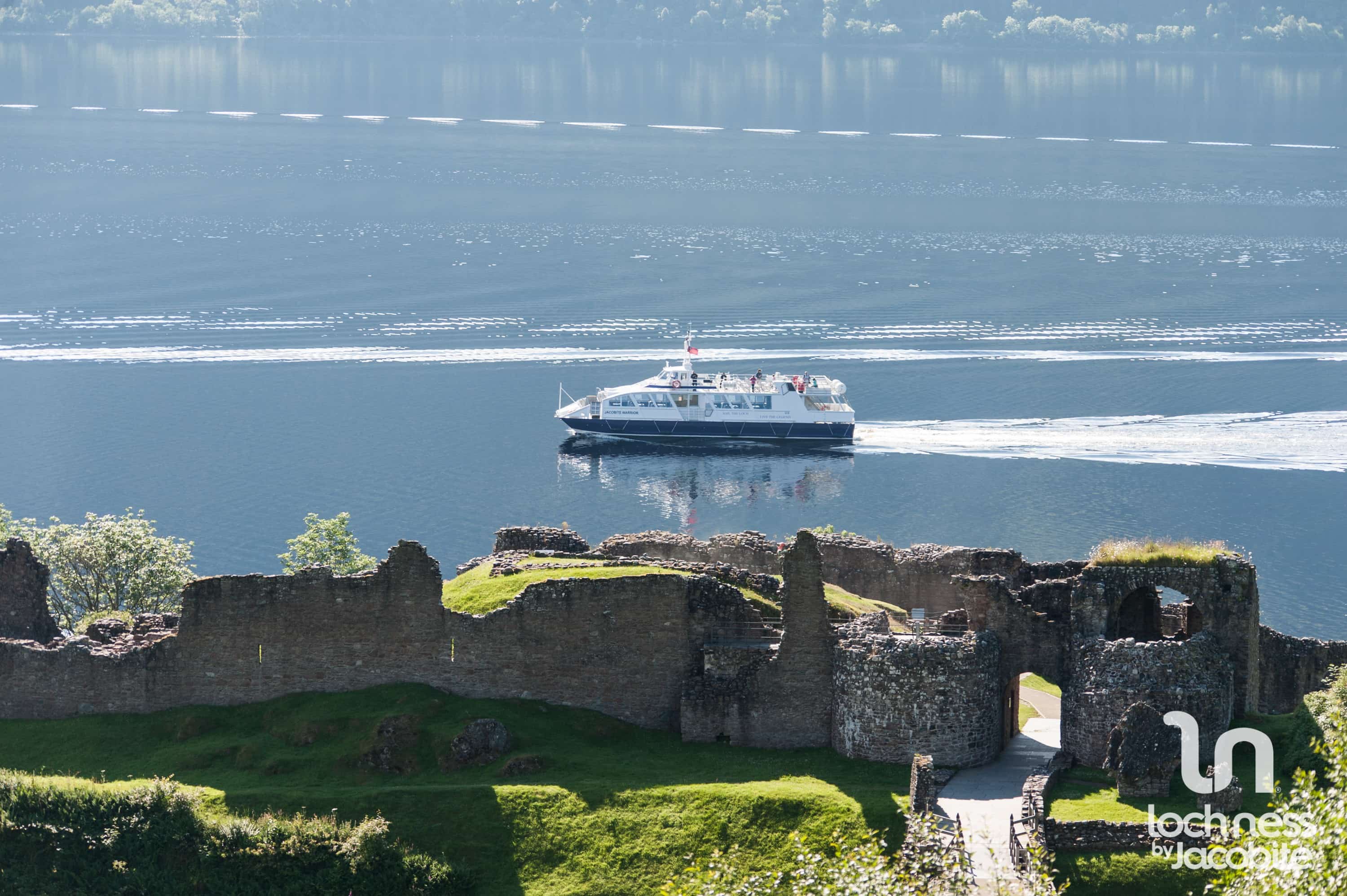
First things first: no, we did not see the Loch Ness monster. Mostly we watched the water and steep hillsides, with gorse bushes, trees, a golf course, and sheep, while a very entertaining young Scotsman rolled his "r"s and chattered on the PA system about the loch (it's not a lake, it's a loch). Loch Ness is the UK's second largest lake by surface area and second deepest (to 754'), but it contains the largest volume of fresh water--more than the rest of the lakes in England and Wales combined. Below 100 feet, the water is a constant 44 degrees F; above that the temperature fluctuates but never gets cold enough to freeze over.


The tour company is named for the Jacobite Rebellion in the late 1600s, the failed attempt to put a Catholic monarch back on the English throne, after King James II was driven into exile in 1688. Clans living in the Scottish Highlands were some of his and his son "Bonny Prince Charlie"'s most ardent supporters.

Urquhart Castle is a ruin of Scottish wars for independence from England. Picts may have occupied the area in the late 500s. St. Columba, who converted the Scots to Christianity, is said to have talked down a loch monster who was trying to eat a servant about that time. The first medieval stone castle was built in the 1200s. Strategically situated on a promontory, it changed hands many times and was finally dynamited in 1692 by retreating Crown forces. We joined the throngs (3/4 German tourists?!?) in visiting the various "rooms" and waited our turn to climb the narrow winding staircase up Grant Tower (it wasn't all that great). A chapel existed for a few decades before the space was converted to weapons storage (go figure). Having seen everything, we bought sandwiches from the visitor center and spent a little bit of time looking at the exhibits before catching the last possible showing of the short documentary that ended with the screen being raised and the curtains opened to reveal the castle down the hill. They also have a working trebuchet on the grounds; no word on when they hold demonstrations.


On the way back it had begun to sprinkle. The boat was less crowded, so we sensibly decided to ride in the enclosed cabin. I wanted to try a spiked hot chocolate from the snack bar, but the cost was too dear, so I settled on a pair of Nessie stuffed animals as Christmas presents. Alas, neither of us remember to pee before we disembarked, so we spent ten minutes looking for a restroom before heading 3 hours to the airport and consequently didn't think to snap a photo of our vessel, so here's one from their website of the "Warrior" in all her glory, with Castle Urquhart in the foreground.


If you want to read more about our trip to Scotland, check out this post about hiking Cairn Gorm Mountain, this one about death and dying in Victorian times, or the one about going to church with Queen E.

Tuesday, May 30, 2017

Scotland: Cairn Gorm Mountain

On Monday of our Scotland trip we drove into Cairngorms National Park so we could take the funicular railway partway up Cairn Gorm Mountain and then take a guided hike the rest of the way to the top. That's us on the summit! (Click for short videos set to inspirational music; the funicular one is pretty cool for any transportation buffs.) In the winter and spring there's skiing, and during the rest of the year hiking. They try to keep the foot traffic low by requiring hikers either to walk the entire distance from the parking lot or else pay for the funicular and guide. For our first time we chose the tour.


Cairn Gorm comes from the Gaelic An Càrn Gorm, for Blue or Green Hill. It is the sixth highest mountain in the United Kingdom. It has given its name to a mountain range that used to be called Am Monadh Ruadh (the Red Hills), for the red feldspar and/or glow of the setting sun.

Here we go, heading for the clouds. I don't think you can see the clear mountain stream in this shot, but water bubbles up from the rock and runs down, where it is caught, purified, and used in the visitor centers.


The Cairngorm Mountain Railway replaced the older chair lifts in 2001. It's easily accessible from the parking lot and takes you 5 minutes up the slope from the lower visitor center to the higher one, with an exhibit, gift shop, restaurant, and the UK's highest post box. The exhibit covers geology, biology, history, and mountain-climbing technology. You can just see the higher visitor center, above the clouds, with some chair lifts visible. During the ski season, the mountain is often covered by several feet of snow.

Before we started the hike, Dear Husband and I felt inadequate in our preparations. Everyone else was wearing hiking boots and waterproof pants, with backpacks, and hiking poles. I just had my little day bag. DH did run back to the car to grab his extra jacket before we started up the mountain, but it proved to be unnecessary. The sun shone so much, in fact, that I got sunburned and wished we had a backpack to hold all the extra layers of clothes that we weren't wearing!

Our guide told us about snow rescues, the rocks, and the flora and fauna. There are apparently more species of lichen on the mountain than all the other kinds of plants put together!

Here is the origin of one of the streams. Our guide drank from it, but all I could think of was my medical school microbiology professor telling us about the parasite Giardia lamblia that lives in "clear mountain streams." I abstained.

Shortly thereafter we had the neat experience of seeing a small family of dotterels, a bird on the endangered species list. With my camera zoom I was able to capture a few photographs. After that little break, we continued up the path. Unfortunately, the reportedly gorgeous vista into the valley on other side of the mountain was shrouded in mist, which proceeded to crest the summit, which is why the photo above looks so cloudy. We then joined our little group in descending the stone path back to the visitor center. It was quite the experience. I'll leave you with a poem by Rafael Campo and a view toward a lake as we came back down below the cloud cover. This might have been my favorite experience of the trip.


Dotterel on land.
Dotterel on water.
"The View from Here," by Rafael Campo

The view from here is breathtaking; the air
Is stratospheric, absolutely clear.
It's nearly operatic, what I hear
When sunlight strikes the headlands, hillsides bared
By drought across the bay. I wonder what
It's like, to be so timelessly extant,
To have been formed by processes one can't
Imagine--shakings of the earth, the weight
Of polar icecaps, lava boiling in the sea--
The faintest outlines of creation, here.
The wind begins to rearrange my hair,
Reminds me of my presence. Willfully,
I write this down, trying to record
The truth. "The view from here is breathtaking."
I pause, and hold my breath until I sing
This opus, made entirely of words.


Sunday, May 28, 2017

Balmoral, Hon!


We could have been Sunday drivers, yeah [click for previous blog post], but we were on a bit of a tight schedule. According to My Amazing In-Laws’ Scotland guidebook, Sunday service at Craithie Kirk started at 11am. Given my cautious driving, however, we didn’t pull into the parking lot until ten minutes after the hour. Happily, the stated time on the posted blue sign was 11:30AM. We had time to scarf a granola bar each and run to the public toilets before walking up the tree-lined drive. At the end were two crowds of people. “The sheep and the goats?” asked DH. There were also police officers, one of whom directed us to queue on the left and warned me that my purse would be searched. “Do you suppose it’s because the Queen is here?” he asked me. I thought not—what would be the odds? I figured it was because of the bombing at  Manchester that places of worship were taking extra precautions.

When the allotted time came our bags were checked, and we filed into the church. It is not ornate but does have some plain if beautiful wooden ceiling panels, a fancy carved wooden rood at the altar, and a stone bust of a young Queen Victoria in a lighted niche. The service was nice, and the preacher good, although we were not impressed by either the organ or the organist. At the end of worship, while we were all standing, the minister came to the front of the chancel and announced, “God save the Queen!” And they all sang the anthem. I had seen it listed in the bulletin and figured it was in recognition of the massacre. It was a very moving display of national patriotism against the background of Scottish discontent about Brexit. Then there was a flurry of motion ahead on the right, in the cross arm of church. I briefly glimpsed a little figure in a bright red dress with a big hat. “Oh shoot!” I exclaimed. She was there after all! By the time we had filed out of church again, two official-looking SUVs with tinted windows were driving away.

DH had noticed some “open on bank holiday Monday” signs while out and about in Aberdeen, but we weren’t sure which Monday they meant. The UK observes Remembrance Day on November 11 not the last Monday in May as in the US. However, it turns out that the UK does have a “May Holiday” the last Monday of May. Thankfully none of our planned excursions was closed—which would be odd, because many Scots were traveling for the three-day weekend, including Her Majesty. That explained the queuing and the searching. Unfortunately, because of the precautions, I did not feel comfortable taking any pictures at the church, even with my camera (cell phones had to be off for worship). 


At this point we were ready for some lunch. Next on the agenda: walk over the River Dee (above) to Balmoral Castle. How kind of the Queen to invite us over after the service! We picked up our audio tour, ate large lunches at the café, and then proceeded to tour the estate. Queen Victoria and Prince Albert had rented and then purchase the estate in the late 1840s. (The previous owner, a British diplomat to Vienna, had choked on a fish bone and expired.) Albert in particular had taken the lead on designing a newer, larger castle with a better view of the valley. Actually, Albert seems to have taken the lead in everything the couple did, which is why his death in 1861 was so devastating for Victoria. She spent large amounts of time there as a widow, and it is where her (in)famous servant John Brown entered her service. (I wrote a whole separate post on death and Victorian mourning, which you can read here.)


One of several large wooden Corgi dogs, DH and an
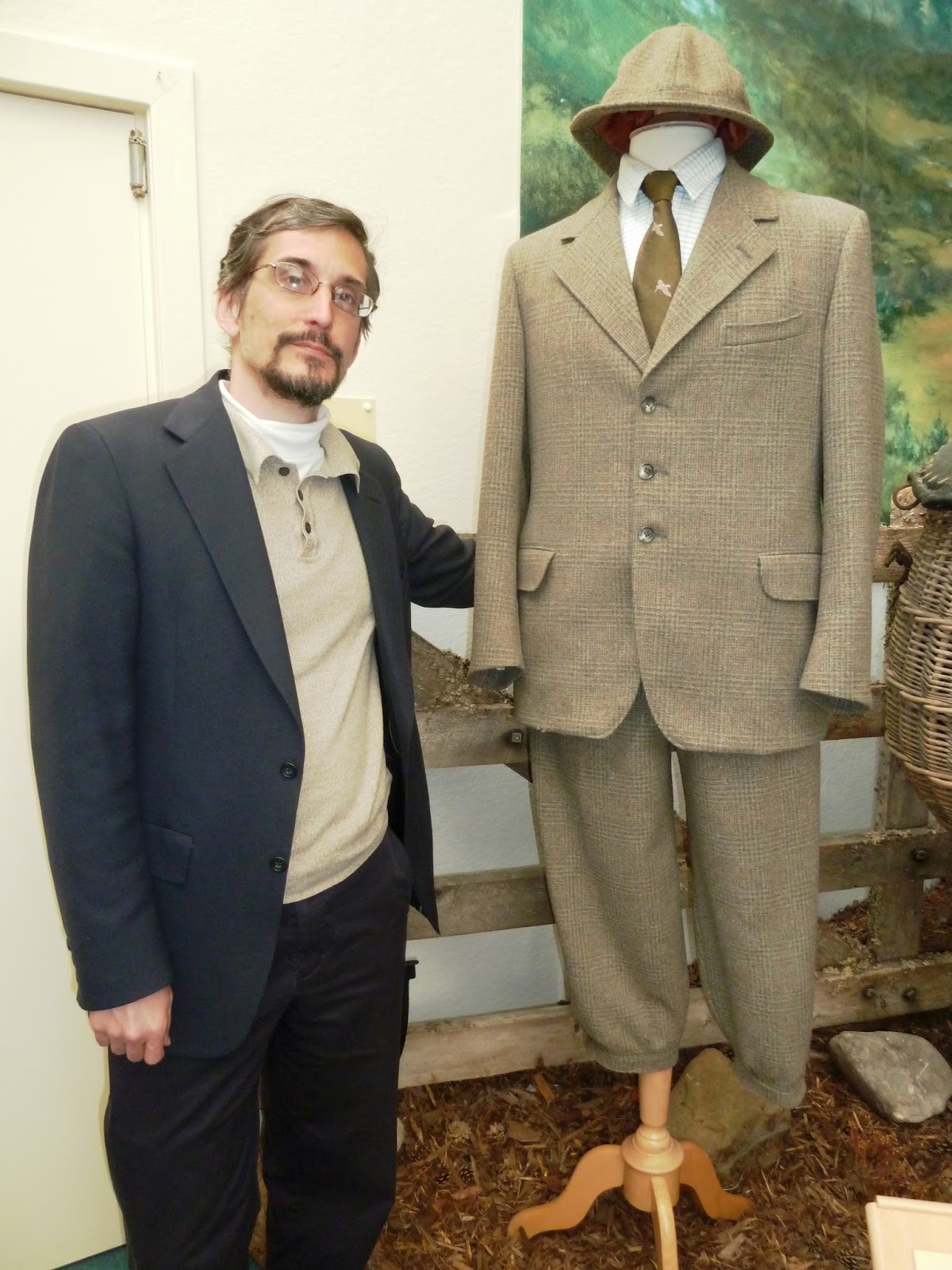
example of "Balmoral tweed," and some bagpiping kit.

Balmoral is a “working estate” whose income comes not just from tourism but also deer culling. Victoria bought a strand of trees to save it from being cut for timber, but the woods around are continually maintained, so they may make some money from selling trees that have to be removed. There is also cattle herding and a tenant farmer. The garden produces most of what the kitchen needs for when the Royal Family comes for summer holiday in August. They strive to be organic and sustainable--for instance, not using (non-renewable) peat for fertilizer. The gardeners have to contend with a short growing season, but it does help that the summer days are extra long.


Because the castle is inhabited, only one room is open to the public, the ballroom, which actually isn’t all that large. There’s an exhibit there about royal residences. We made the excellent decision to walk back to the car park by way of the River Dee, with its rapids roaring off to our left as we strolled. Loathe to give up the fresh air and sunshine, which had warmed up after a chilly spot in the early afternoon, we took a quick spin along the other bank of the river, before getting back in the car and heading north. We stopped for dinner in Tomintoul (pronounced “tom-in-towel”), the highest town in Scotland. Unfortunately, the Clock House Restaurant was all booked up for the holiday weekend, and the Richmond Hotel restaurant across the street was closed for a private function. So we settled on the hotel bar, which was not smoky, served us hot food all the same, and let me enjoy a glass of whiskey while we waited. Then we continued on to our AirBnB, no thanks to the flipping GPS system, and finally settled in for a quiet Sunday evening.


Flowers in the greenhouse.


The intrepid explorers before the the sunken garden.

Saturday, May 27, 2017

Scotland: Sunday Driving

In order to see more of Scotland, Dear Husband and I rented a car. I had driven on the left before when in South Africa, but it was DH’s first time. Knowing us, a predictable comedy of errors ensured from which, thankfully, we and the car survived more or less intact. The first bit of fun was just finding the car rental place, which according to its website was located within walking distance from the airport, or they would send someone to pick you up. We considered getting off the double-decker bus one stop early and trying to find it ourselves but didn't. At the airport, we asked for help in finding a courtesy phone to call the company, and the volunteer mentioned he thought they had moved to the airport, but I stuck to my online instructions. However, the phone number posted online and on the pillar didn’t work, so I called the hotel—the car company had in fact moved its office to the airport. So we just walked up the ramp. There we discovered that the little automatic I had reserved had been returned the night before damaged. Our options were to wait half an hour for a similar car to be cleaned or to pay an extra 150 pounds for a fully protected new little BMW. I didn’t want to wait, and DH wanted the insurance coverage, so we opted for the beemer with the integrated GPS. 

Sweet, right? Except first we had to figure out how to work the toggle/dial navigation system. (Thankfully it was not stuck on trying to direct us to Seattle.) Then we had to ask how to actually, you know, start the car. It was one of those new-fangled fob and button deals. Next we had to figure out where we were going. Street signs seem to be at a premium in Scotland, such that they are typically small and posted sparingly, but after a few wrong turns, we managed to get on the path indicated by our polite, female voiced guide...which led us right to a pile of dirt that might or might not eventually become an entrance ramp onto the A96. Thankfully I still had Google maps up on my phone to get us to the airport, so DH used that to find me the correct turns onto the highway.


Alas, the reprieve was short lived, for no sooner had we gotten on then She directed us to get off again onto a little road. You might ask why we believed her this time, and DH did ask, but I had typed out general directions into our itinerary, and they seemed to match, so we continued along the long and winding road. The GPS was otherwise helpful—maybe too helpful with her repeated cheerful instruction to “Please leave the roundabout at the second exit to continue to follow” the highway we were on—until we actually needed her to help us find our AirBnB houses. To our consternation, She was 0 for 2. This meant numerous wrong turns while we circled around until we finally happened upon them, both times thankfully well before dark.

DH and I each found that driving on the left was not as difficult as the curvy, narrow, rural Scottish roads. Whenever one of us made a turn, we would sing a little ditty to remember where to put the car: “Left, left, left, LEFT, left,” intoned DH. “To left, to the left,” I sang with Beyonce ("Irreplaceable"). It was some of the most careful and defensive driving either of us have ever done, although we each jumped or bumped the curb once or twice. Thank goodness for the full warranty, as we managed to damage one of the rear tires.


But wait, it gets worse. After we had finished touring Balmoral Castle, we took one of the B roads north through Cairngorm National Park. This one was, no joke, a one-lane road, sometimes with stone walls on either side. Occasionally there would be a “passing spot” like the one above for one vehicle to crowd into while (an) other(s) passed by—even a motor home! With all the turns and vegetation, the sight lines were terrible, so it was only with great luck that DH managed to squeeze us by. The one time I was happy to be “stuck” behind a logging truck on one of those little roads was because I knew that it was wide enough that no other vehicle could pass it and surprise me coming around a bend. As it happens, driving on the highway, in towns, and in cities was no easier. Highway frustrations included construction, farm equipment, and slow drivers (see below). Town obstacles included cars parked in the driving lane, a mail truck, and a garbage truck. City obstacles included buses, traffic lights every 50 yards, and endless roundabouts. You know how they say putting together furniture is a good test of the strength of a relationship? I think that driving in a foreign country is another.

Whoever was driving had to pay very close attention to the road, but whoever wasn’t driving got to enjoy the gorgeous views of rolling Scottish countryside, with trees and moss in every shade of green; cattle, sheep, and occasionally horses grazing in green fields that swept up into hills; and mountains that were patchworks of rock, sedge, and the brilliant gold of gorse bushes, all dappled with sunlight and shadows. We were extraordinarily lucky with the weather on our trip, which only added to the beauty.


If you made it this far, you might enjoy the "Sunday Driver" song by the Scottish folk group The Corries [click for YouTube video of them singing it at what looks like a house concert].

Well I've been a Sunday driver noo for many's a happy year
And I've never had my Morris Minor oot o' second gear
I can drive at fifty miles an hour on motorway or track
With me wife up front beside me and her mother in the back

There was me and my daddy and my daddy's mammy
And her sister's Granny and four of her chums
And Auntie Jean

In a crowd of fifty trippers you can always pick me oot
By my "Don't blame me, I voted Tory" sticker on the boot
Wi' my bunch of heather stickin' in ma radiator grille
And me stick-on transfer bullet holes and licence for tae kill

There was me and my daddy and my daddy's mammy
And her sister's Granny and four of her chums
And Auntie Peg

I've a hundred plastic pennants for to tell you where I've been
And my steering wheel is clad in simulated leopard-skin
Up front fae the drivin' mirror hangs a plastic skeleton
And in the back a dog wi' eyes that flicker off and on!

There was me and my daddy and my daddy's mammy
And her sister's Granny and four of her chums
And Auntie May

I always drive as though my foot was restin' on the brake
And I weave aboot the road just so's ye cannae overtake
I can get ye sae frustrated that ye'll finish up in tears
And the sound of blarin' motor horns is music to my ears!
There was me and my daddy and my daddy's mammy
And her sister's Granny and four of her chums
And Auntie Liz

Now if ye wonder how these weekly trips I can afford
It's because I'm on a stipend from the Scottish Tourist Board
You're supposed tae enjoy the scenery, the finest of its kind
And that is why I have a convoy followin' behind!

There was me and my daddy and my daddy's mammy
And her sister's Granny and four of her chums
And Auntie Rose

There's just no way of escaping me, no matter how ye seek
For the simple fact that I'm a traffic warden through the week
I'm boostin' my efficiency, and here's my master plan
I'm savin' up my pennies for to buy a Caravan

There was me and my daddy and my daddy's mammy
And her sister's Granny and four of her chums
And Auntie Gertrude

There was me and my daddy and my daddy's mammy
And her sister's Granny and four of her chums
"Yer gaun too fast!"

Friday, May 26, 2017

Aberdeen: Death and Mourning


The Maritime Museum in Aberdeen, Scotland, is hosting a series of five exhibitions while the Art Museum is temporarily closed. The current one is called "Kiss of Death: Death and Mourning in the Victorian Era." It is anchored by the fanciful bonnet by Jo Gordon (left), the feathers of which simultaneously hide the wearer's face in her grief and project it outward into the public sphere. It cunningly captures the materialistic and highly ritualistic [ideal of] Victorian mourning. The whole concept is named, of course, for Queen Victoria's prolonged mourning for her husband of 21 years, Prince Albert, who was inconsiderate enough to die of typhoid fever (or was it Crohn's Disease?) less than two weeks before Christmas 1861.

(This is an excellent article on the historical importance of Albert's death.)

Of course the mourners had to wear black--shiny black for "full" or "deep" mourning, dull black later on, and shades of purple and even white in "half" mourning. One whole case contained black jewelry at various price points, from jet (actually hardened coal) and onyx through black glass, enamel, and bog wood on down to vulcanite (a hardened rubber). There were two other contemporary art pieces in the exhibition; one of them was a time-lapse video of a performance artist wearing a black crepe dress and weeping while a hidden hose soaked her with water. This made the dye run from the fabric onto the white floor. By the end of the mournful tune playing over the images, the top of the dress was gray and the puddle an inky black at her feet. If a woman cried (or sweated) while wearing crepe, this symbol of public mourning would mark her skin, so she was reminded of it in private as well.


The other contemporary art piece is the one to the right--a curved mirror with pink, tan, and black blobs representing the ectoplasm that might haunt a seance. It reminded me of the review I did of Heather Wolffram's 2009 book, The Stepchildren of Science: Psychical Research and Parapsychology in Germany, c. 1870-1939 for the Journal of the History of Medicine and Allied Sciences. They also had examples of "ghost photography" on display, as well as funeral announcements.


How fitting that while we were in this exhibition, the museum called for a minute of silence to remember the 22 victims of the bombing in Manchester.


Death was all around us in Aberdeen. There's a big bronze sarcophagus commemorating a bishop connected with the University standing on its grounds. We wandered among the tombstones in one old church yard on our way back from the beach on Thursday. Dear Husband walked through another on Friday after attending a choir concert at St. Machar's. Many of them are made of granite, as that stone was mined for building in nearby quarries and gives Aberdeen its nickname of "The Granite City." I snapped the picture to the left while on our way to catch the bus to the airport Sunday morning: we couldn't figure out if that was a granite mushroom that had sprouted among the other memorials or some kind of decorative finial that had fallen off. I'll close with a more somber example: the story told by the headstone below right.


Under the Christian insignia "IHS" (IHSOUS, Greek for "Jesus" in Latin letters), it is dedicated
"To the Memory of Elizabeth Deborah, Wife of John Paton of Grandholm, and youngest Daughter of Thomas Burnett Advocate: died 24th Feb.y 1860, aged 37 years. And of their Child, Elizabeth Bertha, died 11th June 1861, aged 16 months. Also the above John Paton, of Grandholm, who died August the 27th 1879, aged 61 years. His Widow Katherine Margaret died 26th Feb.y 1919, aged 87 years."
The font for the wife and daughter are of the same size, so they must have been done at the same time. Perhaps Elizabeth Deborah was buried with a simple stone, and then when Elizabeth Bertha died too, John decided to purchase a larger one. Because his father in law is mentioned, Thomas B. A. must have contributed some money. Little E. B. was just 16 months old when she died in June, perhaps of polio, measles, scarlet fever, typhoid, or even small pox. Her mother E. D. must have died in childbirth, although at 37 it was unlikely her first. Maybe she caught "puerperal fever" from the midwife's dirty hands, or maybe at an "advanced maternal age" she developed high blood pressure and eclampsia. Smaller type records the dead of John at the relatively young age of 61. Fourteen years his junior, his second wife outlived him by forty years. She must have raised the older children well, as I imagine one of them took care to add her name and dates to this record of their family. Gone, but not forgotten.